The Frontier has an honest, work-boot character: a body-on-frame pickup that seems happiest carrying gear rather than collecting compliments. Nissan Frontier reliability is generally a reasonable bet for a midsize truck buyer, but the individual truck matters more than the badge. Older examples need careful checks for cooling-system and rust problems; newer ones deserve a close look at transmission behavior, recalls, and maintenance records. Buy on condition, not reputation alone. Every car has a story. Here's this one.
The short answer on Nissan Frontier reliability
A well-maintained Frontier can be a sensible long-term truck, especially for an owner who values straightforward utility over the newest cabin technology. Its long-running previous generation gives used buyers plenty to choose from, while the redesigned generation brings a more modern interior and a different powertrain experience. Neither is automatically trouble-free.
I would start with service history and an independent inspection rather than a search for one supposedly perfect model year. A clean underside, documented fluid changes, and smooth operation from cold start through highway speed tell you more than a shiny bedliner. Trucks that tow, plow, or spend winters on salted roads may have worked much harder than their odometers suggest.
The most consequential older-truck concern is the potential for radiator failure to mix coolant and automatic transmission fluid on certain earlier examples. On newer trucks, the question is less about assuming a known failure and more about verifying that applicable recalls and software updates have been addressed. A dealer can check by vehicle identification number, or VIN.
Heritage Note: A compact truck with a long memory
The Frontier carries forward a Nissan small-truck tradition that predates its nameplate in the United States. Earlier Datsun and Nissan pickups built their appeal on manageable dimensions and useful beds, not luxury-car theater. The Frontier grew with American tastes, but it retained the separate frame and practical mission that made those earlier trucks familiar fixtures at worksites and trailheads.
That heritage matters when assessing Nissan Frontier reliability. A sturdy layout is an asset, not a promise that every component will outlast neglect. A truck used as intended still needs cooling-system attention, suspension maintenance, and protection from corrosion. The charmingly unpretentious example with a complete folder of receipts is often a better find than the cosmetically perfect one with no history.
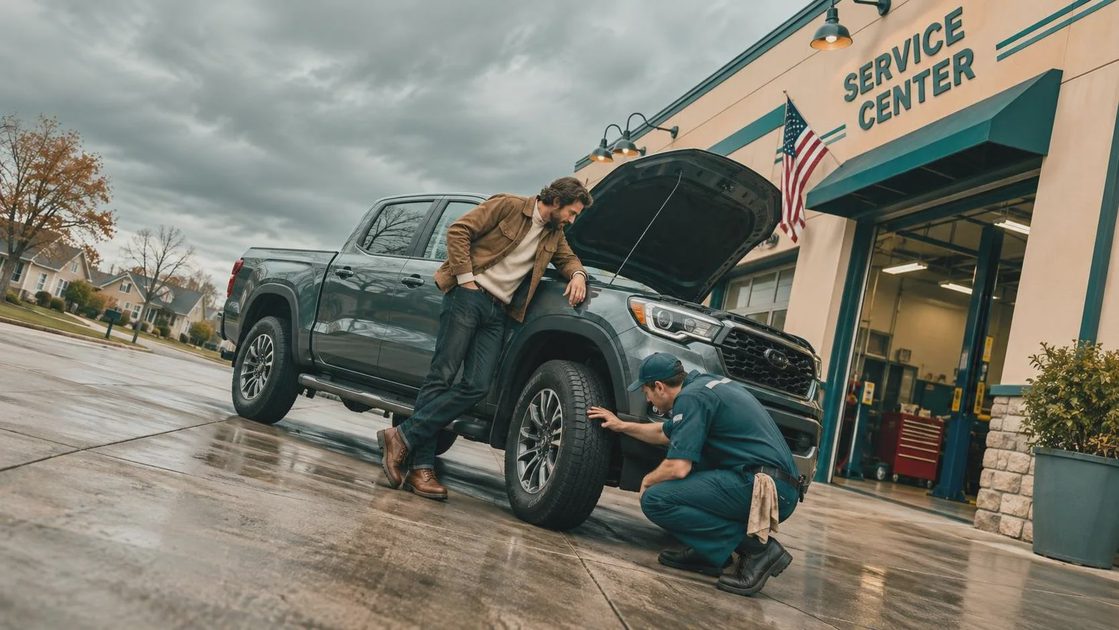
Older Frontiers: cooling and transmission checks
Certain earlier second-generation trucks, particularly examples from the late 2000s, have a documented reputation for radiator-related coolant and automatic transmission fluid cross-contamination. The radiator's internal transmission-fluid cooler can fail, allowing the fluids to mix. That can damage the transmission, turning a cooling-system repair into a much larger bill.
Ask whether the radiator has been replaced and request an invoice showing when and with what part. A replacement does not prove that contamination never occurred. Have a mechanic inspect the cooling system and transmission fluid, review any repair records, and assess shift quality. Milky or discolored fluid is a warning, but clean-looking fluid alone does not guarantee a healthy transmission.
During a drive, notice delayed engagement when selecting Drive or Reverse, slipping under acceleration, harsh shifts, or a shudder. These symptoms have more than one possible cause, so treat them as reasons for diagnosis rather than proof of a particular defect. If the seller will not allow an independent inspection, I would leave the keys on the counter.
Timing-chain noise is another item worth discussing with a technician on older V6 trucks. Listen for an unusual persistent whine or rattle, especially at startup, and compare it with the service history. A noise needs proper diagnosis; it is not a license to condemn an engine from a parking-lot recording.
Newer trucks and Nissan Frontier reliability
The Frontier received a new V6 and nine-speed automatic for the 2020 model year, ahead of the redesigned truck introduced for 2022. Those changes matter when comparing used examples: a late previous-generation truck may share the newer powertrain, so the body style alone does not tell the whole story.
On a test drive, let the transmission warm up and try gentle acceleration, a hill, and a steady highway cruise. Note repeated harsh shifts, hesitation, warning lights, or behavior that makes the truck difficult to control smoothly. Some shift feel can be a matter of calibration or driving conditions; persistent symptoms deserve a technician's assessment and a scan for stored fault codes.
Recall status is essential. Enter the VIN into the National Highway Traffic Safety Administration's recall lookup and ask a Nissan dealer to confirm whether open remedies have been completed. Some Frontier trucks have been subject to transmission-related recalls, but applicability depends on the specific vehicle. An open recall is not necessarily a reason to reject a truck; an unavailable remedy or unresolved symptom is worth understanding before committing.

Inspect the frame, suspension, and working parts
Nissan Frontier reliability is also a question of where a truck has lived. Surface rust on underbody hardware is different from deep scaling, perforation, or weakened structural metal. A shop should inspect the frame, crossmembers, brake lines, and mounting points on a lift, paying particular attention to areas where mud and salt can collect. Fresh undercoating can hide problems as easily as it can protect metal.
Look for uneven tire wear, leaking shocks, torn suspension boots, and steering play. A clunk over bumps may be a worn suspension component rather than a major failure, but it still belongs in the purchase calculation. On four-wheel-drive examples, engage the system according to the owner's manual and check for warning lights or unusual noises. Avoid testing part-time four-wheel drive on dry pavement if the manual advises against it.
A tow hitch is not evidence of abuse, but heavy towing can accelerate wear. Ask about trailer use and look for bent hitch components, damaged wiring, and rear suspension sag. Check the bed floor and cab for water intrusion, and make sure every window, lock, camera, and climate-control setting works. Small electrical repairs add up quickly.
How to choose a dependable example
For the strongest Nissan Frontier reliability case, assemble three things before agreeing on a price: a VIN-based recall check, maintenance records, and a pre-purchase inspection by a shop familiar with trucks. Give the mechanic permission to scan the vehicle and inspect the underside; a quick look around the lot is not enough.
Compare records against the maintenance schedule for that truck's year, engine, and use. Severe-service intervals may apply to towing, dusty roads, or repeated short trips. Missing paperwork is not automatic proof of neglect, but it shifts more of the risk to the buyer. Budget for catch-up maintenance and any repairs found during inspection.
I would favor a documented, rust-free truck with sensible miles over a cheaper example whose transmission behavior or cooling history raises questions. The Frontier's appeal is its willingness to do a job without ceremony. Give it the same respect you would give a more glamorous machine: inspect carefully, maintain it properly, and let the evidence tell its story.