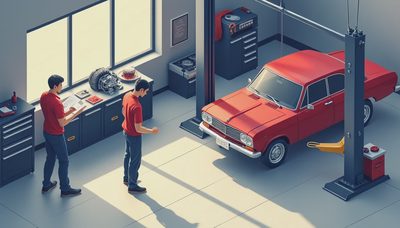
Every car has a story. Here's this one. Few repairs announce themselves with less glamour than a tired engine mount, yet from behind the wheel, what stays with you is the change in character: a tremor at idle, a thump on takeoff, a cabin that suddenly feels older than the odometer suggests. If you're asking **how much does it cost to replace engine mounts**, the short answer is usually **$300 to $1,200 total**, though some luxury, performance, or tightly packaged vehicles can run higher. The final bill depends on how many mounts need replacement, how difficult the engine is to support and access, and whether you choose factory or aftermarket parts.
What engine mounts do, and why they matter more than most drivers think
Engine mounts are the pieces that secure the engine and transmission to the vehicle's subframe or chassis while absorbing vibration. In most modern cars, they are made of rubber bonded to metal, though some vehicles use hydraulic mounts filled with fluid for better isolation. On a well-kept sedan, coupe, or SUV, healthy mounts help the cabin feel composed. On a sports car, they also keep drivetrain movement under control when you roll into the throttle or make a clean downshift.
When mounts wear out, crack, collapse, or leak, the engine can shift more than it should. That creates clunks during acceleration, harshness at idle, extra vibration through the steering wheel, and in some cases strain on hoses, exhaust components, or CV joints. A failed mount rarely strands a driver immediately, but it can make the whole car feel unrefined. That matters whether you drive a Honda Accord, a BMW 3 Series, or a 911 that deserves to feel tight and intentional.
Typical cost to replace engine mounts
So, **how much does it cost to replace engine mounts** in the real world? For many mainstream vehicles, replacing one mount costs about **$250 to $600**. Replacing multiple mounts at the same visit often lands in the **$500 to $1,200** range. Parts alone can be as little as **$50 to $150** for a basic mount on a common car, while hydraulic or active mounts on German luxury models can run **$200 to $500 or more each**.
Labor is usually the bigger variable. Shops often charge **1.5 to 5 hours** depending on the vehicle layout. A front-wheel-drive commuter with decent access is one thing; a transverse V6 in a crowded engine bay is another. On some cars, one mount is easy and another hides behind components that must be removed before the engine can be safely supported and lifted slightly.

At an independent repair shop, labor rates commonly fall around **$100 to $180 per hour** in many parts of the U.S. At a dealership, rates can be higher. That is why the same repair might cost $380 on a Toyota Camry at a local shop and $950 on a Mercedes-Benz or Audi with hydraulic mounts and tighter packaging.
What affects the price most
The biggest cost factors are vehicle type, mount design, and how many mounts are bad. Most vehicles have multiple mounts, and if one has failed from age and heat, the others may not be far behind. Replacing only the visibly failed mount can save money today, but on a higher-mileage car it may lead to a second labor bill later.
Performance and luxury cars often use more sophisticated mounts to keep noise and vibration low without sacrificing control. That is good for refinement, but not for the invoice. Factory mounts from brands like BMW, Mercedes-Benz, Lexus, and Porsche can be pricey, and some owners prefer OEM parts to preserve the car's original character.
Heritage Note: The best grand touring cars always hide their engineering effort beneath a calm surface. Engine mounts are part of that tradition. When they are right, you notice the engine's voice, not its shudder.
Another factor is whether related work is done at the same time. If a shop already has access during a larger repair, replacing mounts can be more cost-effective. If broken mounts have caused damage to brackets, exhaust hangers, or nearby components, the total rises quickly.
Signs you need engine mount replacement
The classic symptoms are easy to miss at first. A driver may feel more vibration at stoplights, hear a dull knock when shifting from park to drive, or notice the engine lurching slightly under load. In a manual car, takeoffs may feel less clean. In an automatic, gear changes can seem harsher because the drivetrain is moving more than it should.
You might also spot a sagging mount, torn rubber, or leaked hydraulic fluid during an inspection. On some vehicles, excess engine movement is obvious if the hood is open and the engine rocks dramatically when the throttle is blipped. That test should be done carefully and by a professional when possible.

If you're wondering **how much does it cost to replace engine mounts** because the car has begun to shake at idle, do not assume the mounts are the only cause. Spark plugs, ignition coils, fuel issues, or a true engine misfire can feel similar. A good shop will confirm the fault before selling the repair, which is money well spent.
Should you replace one mount or all of them?
This is where the practical answer beats the cheap answer. If one mount failed early because of a manufacturing issue or impact damage, replacing a single mount can be reasonable. But if the vehicle has age and mileage on it, matching mounts often wear together. Replacing a pair, or all major engine and transmission mounts, can restore the car's smoothness in one visit.
For budget-minded owners, ask for a priority list. A trusted independent shop can tell you whether the failed mount is urgent and whether the others are merely aged or truly near the end. If you're keeping the car for several more years, doing them together often gives the better long-term value.
For enthusiasts, there is also the aftermarket question. Some performance mounts reduce drivetrain movement and sharpen response, but they usually add cabin vibration. On a weekend toy, that trade can be part of the fun. On a daily-driven luxury sedan, it can feel like a mistake by the third commute.
How to save money without cutting corners
If you're still asking **how much does it cost to replace engine mounts**, the smartest move is to get **two or three quotes** with parts and labor broken out clearly. Ask whether the estimate includes OEM, OE-equivalent, or budget aftermarket mounts. For mainstream cars, a quality aftermarket mount can make sense. For refined luxury models, OEM is often worth considering.
Choose a shop with solid diagnostic discipline, not just the lowest price. Engine mount jobs require proper support of the engine and attention to torque specifications. A sloppy install can create new vibration instead of curing the old one.
Finally, do not wait too long. Bad mounts tend to make a car feel progressively rougher, and the added movement can stress other parts. Replacing them at the right time can make an older car feel surprisingly young again. If your vehicle has started to shudder, clunk, or twist under power, now is a good time to price the job and decide whether a fresh set of mounts will bring back the composure the car was built to have.