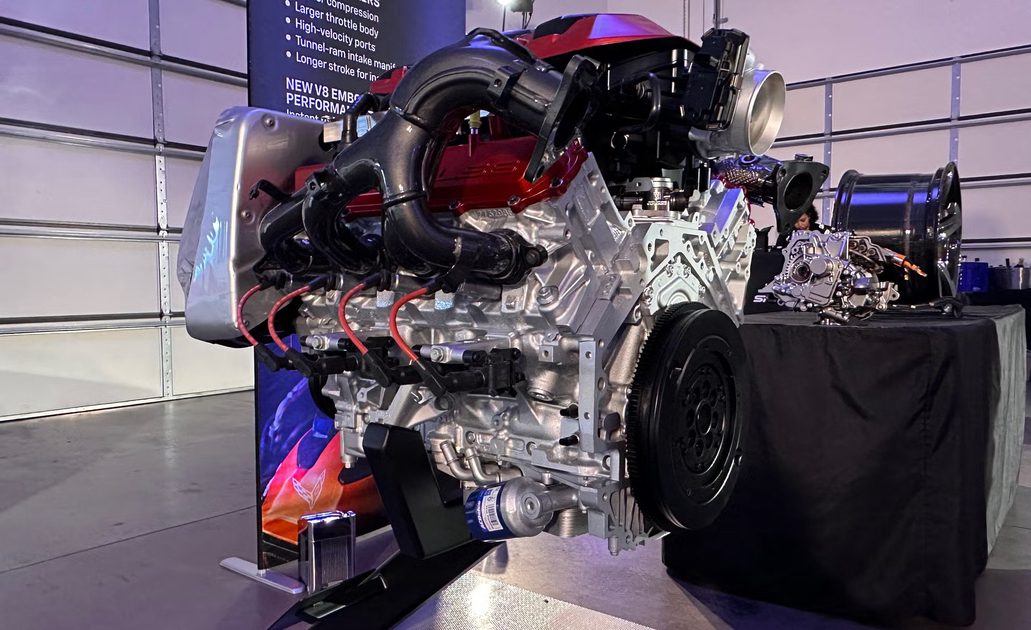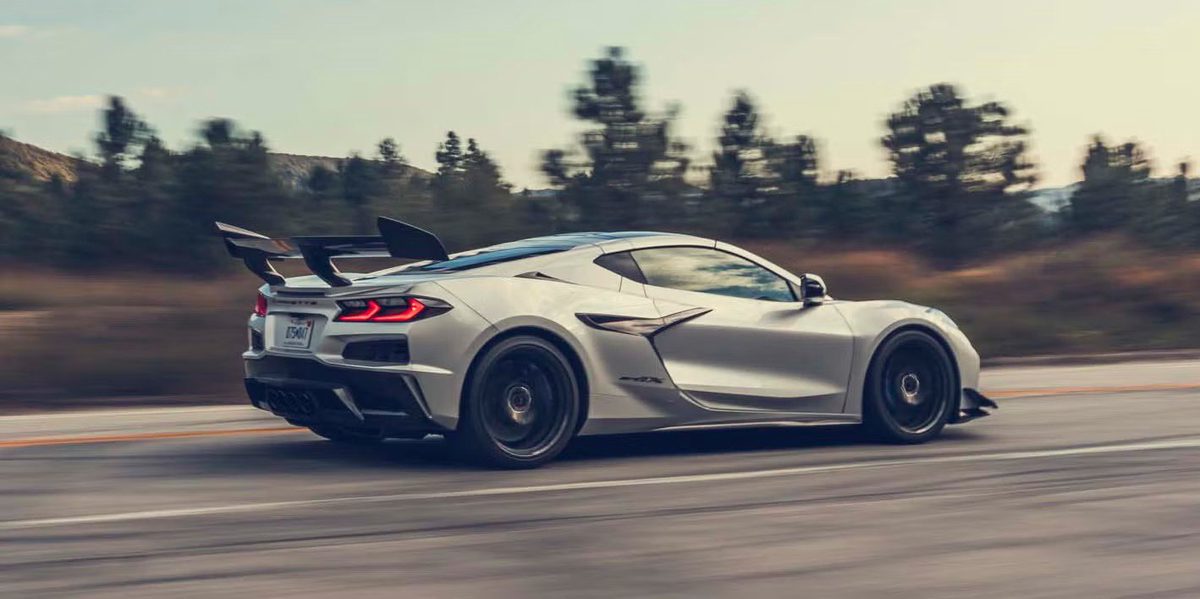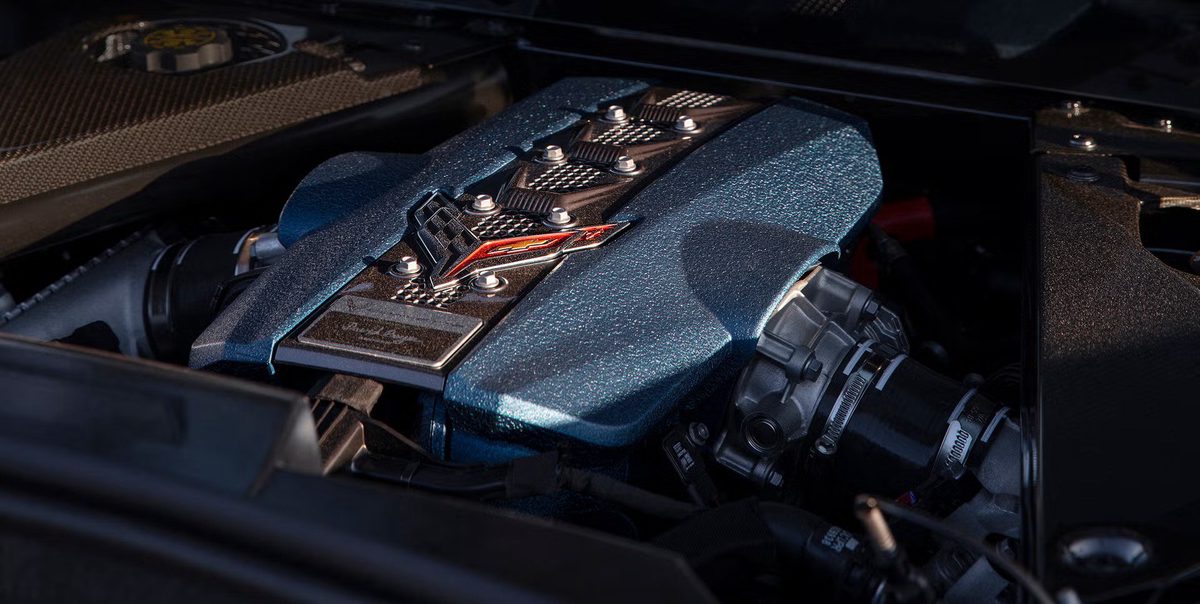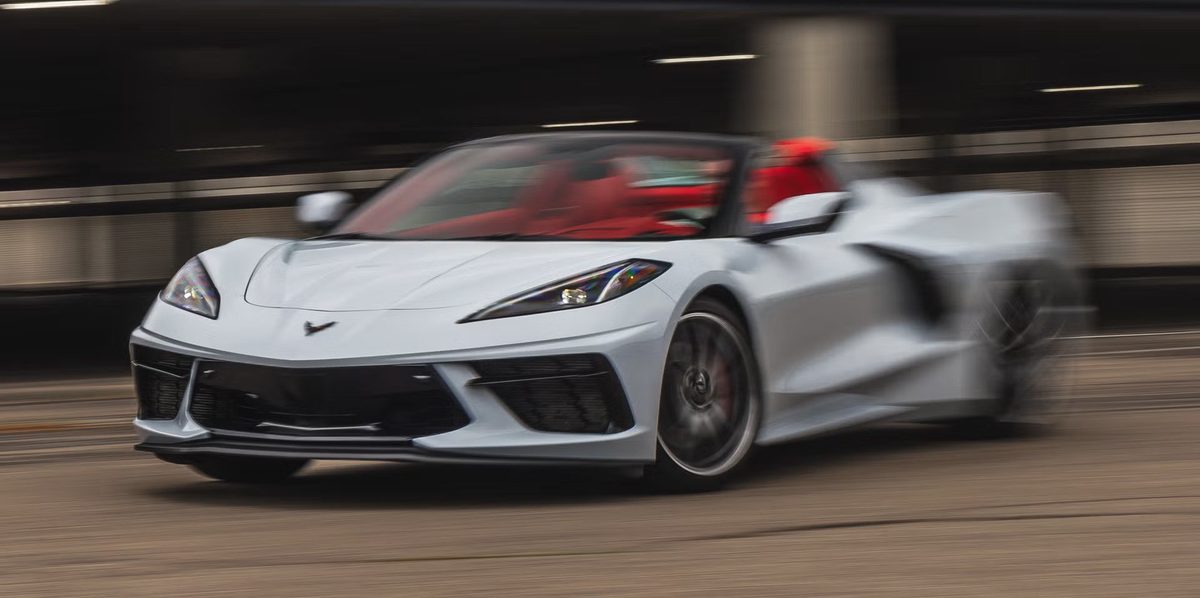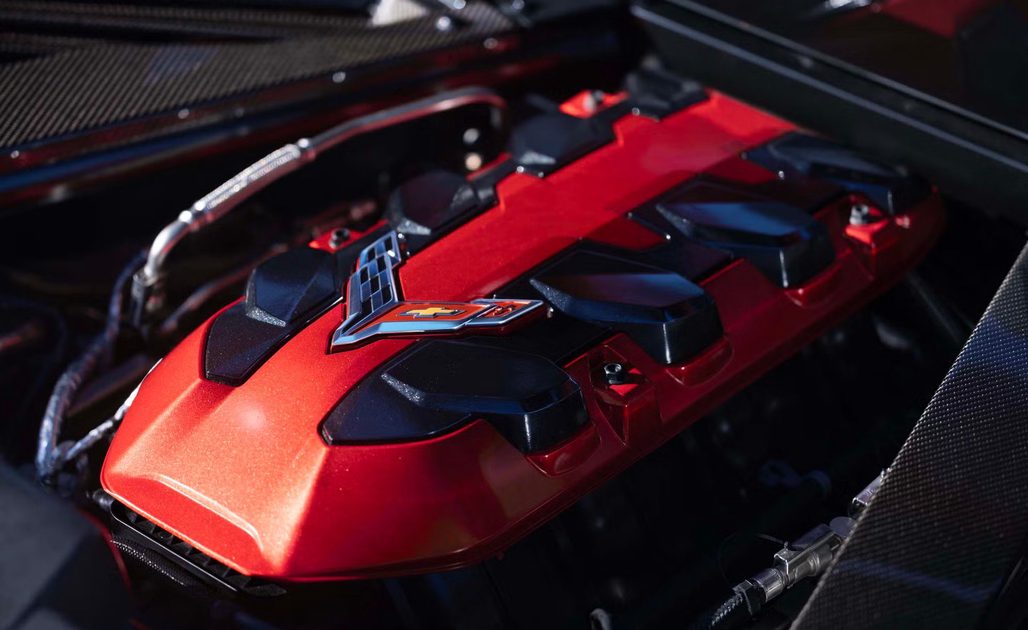
The legendary 409-cubic-inch big-block V-8 once ruled drag strips, but it never found its way under the hood of any factory Corvette. That changes with the arrival of the new LS6, a 6.7-liter V-8 displacing — fittingly — 409 cubic inches, which serves as the base engine in the 2027 Corvette Stingray and the newly unveiled Grand Sport and Grand Sport X models. General Motors chose the LS6 designation because this engine introduces port fuel injection and represents the sixth generation of the iconic small-block V-8. That lineage means it carries the traditional 4.4-inch bore spacing and retains the cam-in-block architecture with rocker arms and two valves per cylinder. Like the current 6.2-liter LT2 in the 2026 Stingray, the LS6 also incorporates direct injection, with Chevrolet branding the combined fueling system PDI.
The outgoing LT2 tops out at 495 horsepower and 470 pound-feet of torque. The new 6.7-liter LS6 raises those figures to 535 horsepower and 520 pound-feet — the most power and the highest naturally aspirated torque ever available in a base-trim Corvette. Both engines land at roughly 80 horsepower per liter, which is worth noting. GM kept the bore at 103.25 mm but increased the stroke to an even 100.00 mm. The engine remains just barely oversquare, but piston speed increases considerably while the 6500-rpm redline is maintained — a requirement that necessitated forged pistons and connecting rods. The longer stroke pays dividends in torque, with peak twist arriving at just 4600 rpm compared to the LT2's 5150 rpm.
Mike Kobica, assistant chief engineer of small-block engines, noted that compression was bumped to 13.0:1, up from the LT2's 11.5:1. "If you get the CR up, it helps everything, but it can be a nightmare." Managing the heat that comes with higher compression required new cylinder heads with a two-piece water jacket arrangement, allowing targeted cooling around the most thermally stressed areas: the zones surrounding the spark plugs and exhaust valves. "If you'd have said at the beginning that we'd end up with a higher compression ratio than we had in the leaded fuel days, we'd have thought you were crazy."
Moving this much air requires a rethought intake system, and the LS6 features a new tunnel-ram design. The throttle body has been enlarged from 87 to 95 mm, feeding into an unrestricted plenum holding 11.5 liters of volume with 130-mm intake runners — somewhat smaller than the LT2's 14.2-liter plenum and 220-mm runners. The intent is to optimize airflow velocity, "encouraging the air to get to the cylinder heads at just the right velocity at the right time." Kobica described the development process: "We did some bake-offs. We had the computers coming up with their models, and then we had the graybeards in the flow lab. These are technicians that don't even use gauges. They use their ears to listen, and they know that it's flowing right when it's really singing."
Additional engineering changes include a second oil feed to the crankshaft to prevent starvation under the increased connecting rod loads. The LS6 also revives "tri-Y" exhaust manifolds — chosen primarily for their ability to generate an aggressive exhaust note rather than for outright power gains. No performance exhaust is required to unlock maximum output on LS6-equipped Corvettes — all the horsepower and torque are standard. An optional center-exhaust configuration doesn't change the numbers but does make the V-8's voice considerably more dramatic, which seems worth checking on the order sheet.
The base Corvette Stingray retains its 4.89:1 final drive ratio, while Z51-equipped models and the Grand Sport twins adopt the Z06's 5.56:1 ratio. The Grand Sport X adds 186 horsepower of electric front-axle assistance to the LS6, combining for a total output of 721 horsepower.