A beloved engine has a particular voice on a cold morning: the reluctant first turn, the uneven idle, the moment it finally settles. A block heater can make that opening act easier by warming part of the engine before you turn the key. It will not turn winter into summer, and it cannot fix a weak battery or neglected ignition system. But in genuinely cold weather, it can help an engine start more readily and reach useful operating temperature sooner.
What a block heater actually does
A block heater uses electricity from an external outlet to warm the engine before startup. Many designs heat coolant, which then transfers some warmth to nearby engine components. Others warm the engine through an external contact surface. The exact effect depends on the heater, its location, the weather, and how long it runs.
That matters because cold engines face several challenges at once. Oil becomes thicker as temperatures drop, making the engine harder to crank and slower to circulate lubricant. A cold battery also has less starting power available. Warming the engine can reduce the load on the starter and help the engine run more comfortably after it fires, though it does not necessarily warm the battery itself.
You may also get cabin heat sooner, particularly with a coolant-heating system. Do not expect instant defrosting, however: a block heater is not the same as a dedicated cabin heater or remote-start system.
Heritage Note: Long before remote-start apps, cold-climate drivers relied on simple external heaters to make winter mornings less punishing. That practical tradition suits a collector car rather well: mechanical sympathy rarely needs a touchscreen.
Which kind fits your car?
A block heater is not one universal part. The right arrangement depends on the engine's design, available installation points, and whether originality matters to you.
An engine-mounted immersion heater typically replaces a designated plug or installs at a manufacturer-specified location so its heating element contacts coolant. It can be a tidy, effective solution, but installation may require draining coolant and working in a cramped area. The installer must use the correct part and seal for that engine; a poorly fitted heater can leak.
An inline coolant heater is installed in a suitable coolant hose. Hose routing, diameter, flow direction, and mounting position matter, and not every engine bay has a sensible place for one. A professional familiar with the specific car should check compatibility rather than cutting the most convenient hose.
A contact heater attaches to an approved exterior surface and transfers heat through the metal. Some vehicles use this style instead of an immersion heater. Installation surfaces and retention methods vary, so follow the heater manufacturer's instructions rather than assuming that any flat spot will work.
An oil-pan heater is a related alternative, not quite the same thing as a coolant-warming block heater. It is intended primarily to warm oil and requires a suitable pan and a product approved for that application. It may not deliver the same coolant or cabin-warming benefit. Magnetic types also require a compatible metal surface; they will not adhere to every oil pan.
For a modern performance car, start with the owner's manual or a dealer's parts department. On an older machine, ask a marque specialist about cooling-system condition, hose availability, and reversible installation. A beautifully preserved engine bay deserves a plan that respects both function and original hardware.
When and how long to plug it in
A block heater is most useful when a car must start after sitting outside in severe cold. The temperature at which it becomes worthwhile varies by vehicle and climate, so follow the owner's manual where it gives a recommendation. A healthy car parked in a moderately cool garage may have little need for one.
Several hours before departure is a practical starting point; leaving a heater on all night is not automatically necessary. Follow the vehicle or heater maker's guidance, since heat-up time varies. An outdoor-rated timer can make the routine easier, provided it is rated for the heater's electrical load and used according to its instructions.

To estimate electricity use, multiply the heater's wattage by its operating hours and divide by 1,000 to get kilowatt-hours. Then multiply by your electricity rate. For example, a 400-watt heater running for three hours uses about 1.2 kilowatt-hours. Your actual cost depends on the heater, schedule, and local rate.
The heater is part of preparation, not a substitute for it. Use the oil viscosity specified for the expected temperatures, maintain the correct coolant mixture, and address a weak battery before the cold arrives. Once the engine starts, drive gently until it warms; avoid hard acceleration and high revs while the oil and other fluids are still cold.
Installation and electrical safety
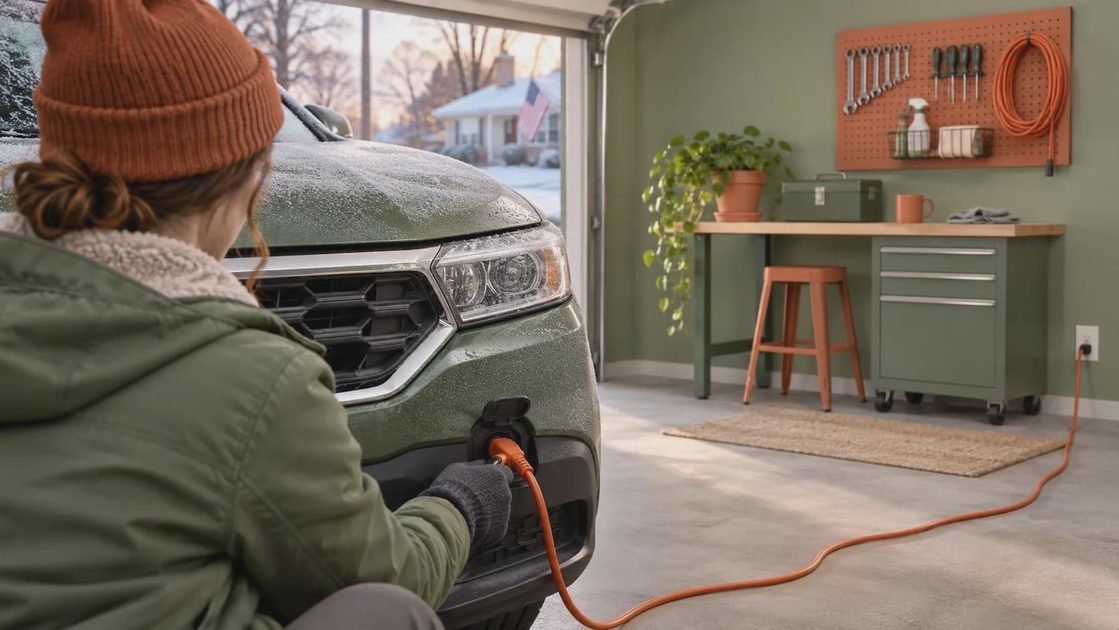
Use a grounded outdoor outlet and a cord rated for outdoor use and the heater's load. Inspect the plug and cord for damage, keep connections clear of standing water and snow, and use ground-fault protection as required for the outlet. Do not run a cord through a doorway where it can be crushed or route it near hot exhaust parts, belts, or sharp edges.
Before driving away, unplug the block heater and secure its vehicle-side cord. A conspicuous reminder near the driver's door can save a damaged cable and an embarrassing departure.
For installation, a qualified technician should verify the exact engine and heater application, then check for leaks and proper cord routing. On a collectible car, discuss where the plug will sit before work begins. A discreet, accessible location is better than a cable dangling across a freshly detailed grille, but safety and clearance come first.
Finally, a block heater is not a reason to run an engine in a closed garage. Exhaust contains carbon monoxide, which can build up to dangerous levels. Unplug first, open the garage, and move the car outside promptly after starting. The goal is a kinder beginning for the engine—and a safe one for the person who cares about it.