The Future Garage: Alfa’s Next Stelvio, Audi’s TT EV, BMW’s iM3, and the Camaro Comeback
Waiting is part of car culture. Anyone who’s ever hunted a rare part number or watched a restoration cure under fresh paint knows the rhythm: anticipation, obsession, payoff. And in a market flooded with samey crossovers, the truly interesting stuff stands out because it carries a promise—of design worth staring at, of drivetrains that rewrite the rules, of nameplates that deserve another shot.
Car and Driver’s look at what’s coming from 2026 through 2030 isn’t just a calendar of product. It’s a preview of what manufacturers think matters. And for once, the list isn’t afraid to include a few cars with real personality—even if some arrive later than planned.
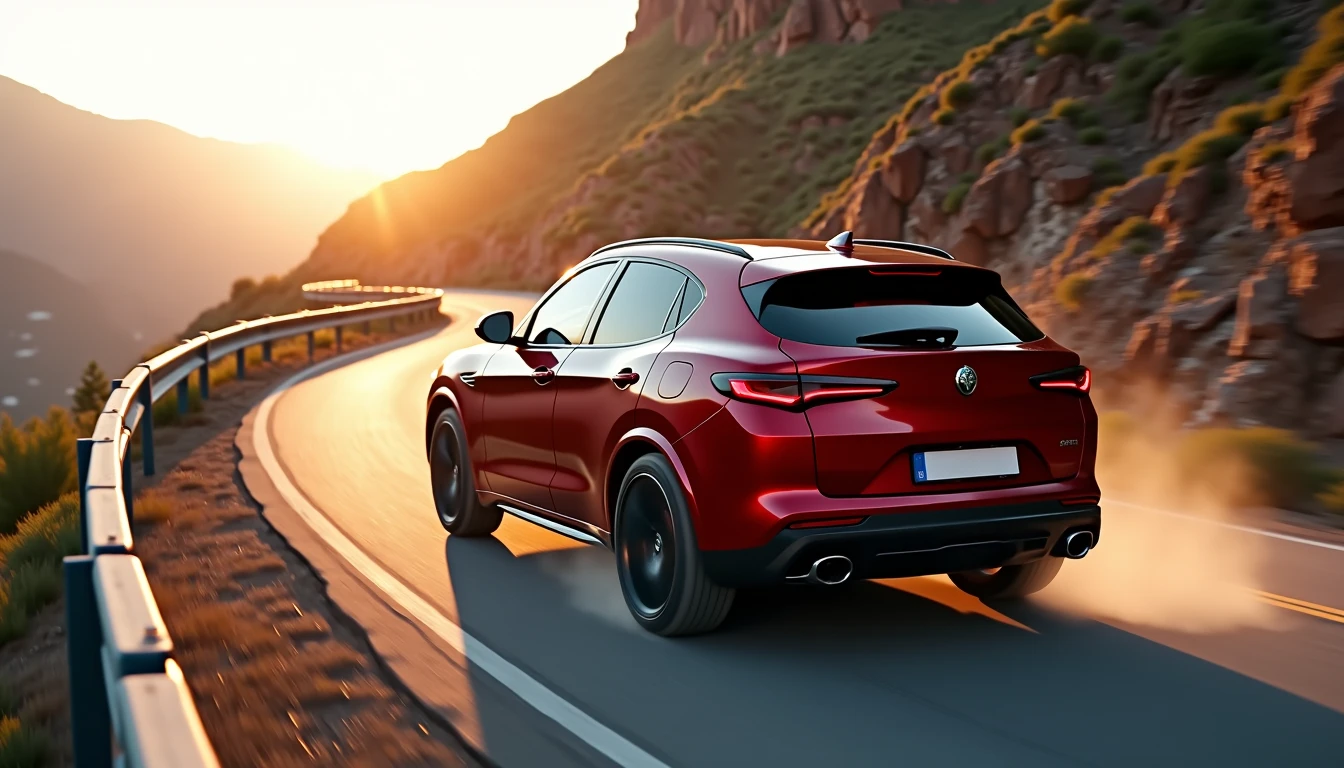
Alfa Romeo Stelvio (2027): The Italian SUV grows up, and goes electric (or hybrid)
The Stelvio has always driven like it had something to prove. Even in stock form, it’s been one of the rare SUVs that feels like it was tuned by people who actually enjoy steering feel—an Alfa trait that, when it’s good, feels like a family recipe.
Now the second-generation Stelvio is getting “thoroughly rethought,” and if you were penciling it in for 2026, sharpen that eraser: it’s been delayed until 2027 at the earliest. The big headline is powertrain choice. The new Stelvio will be offered as either a hybrid or a fully electric model—an acknowledgement that performance and electrification aren’t enemies, but also that buyers still want options.
Underneath, it moves to the STLA Large platform, which could nudge it from compact territory closer to mid-size. Translation: more footprint, more room, and likely a different stance on the road—something Alfa will need to manage carefully if it wants to keep that lithe, eager-to-turn character.
And yes, the dream scenario is still on the table: a future Quadrifoglio performance variant that *could* use the Hurricane twin-turbocharged inline-six, the same engine slated to show up in its platform-mate, the Dodge Charger. If Alfa actually pulls that off with the right calibration, the Stelvio could become the rare modern performance SUV that feels soulful instead of simply fast.
Heritage Note: Stelvio isn’t just a pretty name—it's a famous mountain pass. Alfa’s best cars have always felt engineered for roads like that: quick hands, quick reactions, and a willingness to dance.
Audi’s TT EV successor (targeting 2027): A new design language and a price near $100,000
Audi is plotting an electric sports car based on its Concept C, positioned between the departed TT and the long-gone R8. That’s not a small promise. The TT was the cool design object you could daily. The R8 was the halo you stared at through showroom glass. Bridging that gap—especially with electrons—takes confidence.
The Concept C is described as ushering in a new Audi design language with bold lighting, clean surfacing, and an interior focused on high-quality materials. That matters because the quickest way to make an EV sports car feel disposable is to give it an interior that looks like a tablet glued to a countertop.
The architecture is equally telling: this Audi will share a platform with the upcoming Porsche 718 EVs. That alone suggests it’s not being treated like a compliance car. Expect both a rear-wheel-drive single-motor version and an all-wheel-drive dual-motor setup.
Timing and money? Car and Driver expects the TT successor to arrive at some point in 2027, with a price approaching $100,000. That’s a serious jump from old TT vibes, and it means Audi isn’t chasing affordable fun—it’s chasing premium electric performance with design credibility.
Heritage Note: The original TT succeeded because it had a shape you could sketch from memory. If Audi wants this EV to matter, it needs the same instant-recognition magic—just with a new silhouette and a new soundtrack.
BMW iM3 (2027): The first proper electric M car goes quad-motor
BMW’s M cars have always been about texture—how the chassis loads up mid-corner, the way power builds, the feedback through the wheel. So the idea of an electric M3 has been either thrilling or sacrilegious depending on your faith.
Here’s the concrete shift: BMW’s venerable 3-series now gets an electric companion called the i3, riding on the same 800-volt architecture as the iX3 SUV. The i3 is scheduled to go on sale in the U.S. at the end of 2026.
Then comes the one enthusiasts will argue about in group chats: the iM3, expected to follow in 2027, and expected to use a quad-motor powertrain. Four motors changes the conversation because it opens the door to truly aggressive torque vectoring—less “EVs are fast in a straight line,” more “EVs can rotate a car on command.”
If BMW nails the calibration—the pedal mapping, the chassis balance, the repeatability—this could be the moment the electric performance sedan stops feeling like a physics demo and starts feeling like an M car.
Heritage Note: The M3 legend was built on engines, yes—but also on control. Quad-motor torque vectoring could be the modern equivalent of a perfectly judged limited-slip diff.
Silverado (2027): New small-block V-8, familiar attitude, and a $40,000 baseline
Pickup trucks aren’t a niche in America—they’re the main event. Chevrolet knows it, and for 2027 it’s preparing to overhaul the Silverado, its moneymaker. The next-generation truck is expected to go on sale by the end of this year, wearing styling that’s “reworked” but doesn’t stray far from the current truck’s assertive look.
The interesting bits are under the skin. An updated version of the current turbocharged four-cylinder will be joined by a new small-block V-8, “likely” at 5.7 liters. That engine is expected to make more power than the current 5.3-liter’s 355 ponies, and there are also rumors of 6 percent better fuel economy from the new eight-cylinder.
The Duramax diesel six-cylinder is expected to carry over as well. And crucially, the Silverado should continue to start at around $40,000 for the base WT trim, keeping it planted in the heart of the working-truck market even as the hardware evolves.
Heritage Note: “Small-block” isn’t just an engine family; it’s a Chevrolet dialect. A modern 5.7-liter V-8 in a next-gen Silverado is GM reminding everyone that tradition can still pay the bills.
Camaro (2029): Two doors (probably), four doors (maybe), and a Corvette V-8 rumor
The Camaro coming back for the 2029 model year is the kind of news that makes you look up from your coffee. The nameplate isn’t just a product; it’s a culture war, a weekend ritual, a Cars and Coffee magnet.
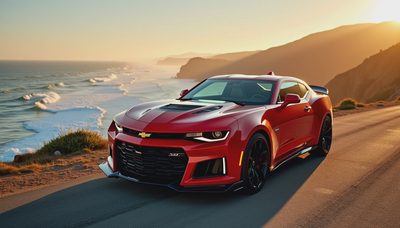
Car and Driver says it’s set for a “triumphant return,” and the early expectations are deliciously provocative. It will likely return with two doors, but there’s “a strong chance” Chevy offers a four-door configuration too, since it will share a platform with new sedans from Buick and Cadillac. A four-door Camaro will make some purists grumble. It’ll also make the product planners smile, because it broadens the market without killing the coupe.
Powertrains? A turbocharged four-cylinder is likely the base engine, but the spicy rumor is the Camaro borrowing the 535-hp 6.7-liter V-8 from the Corvette. Transmission hopes are refreshingly human: a 10-speed automatic is expected, and it will “hopefully” be joined by a six-speed manual. Amen to that.
Production is expected to start in late 2028, with a starting price that will “probably” begin around $40,000.
Heritage Note: Camaro has always been at its best when it balances accessibility with attitude. If Chevy can keep the entry price near $40K while offering real V-8 firepower, it’ll be back in its natural habitat: punching above its weight.