Every car has a story. Here's this one — except it isn't a car. The Kawasaki Ninja H2R is the fastest production-based motorcycle on the planet, and its top speed is the kind of number that belongs in a supercar narrative. When Kawasaki first showed the H2R in 2015, the claimed Ninja H2R top speed of 249 mph made every hypercar on the road look half-hearted. As a judge who spends weekends at Pebble Beach, I'm used to cars that promise 200 mph. The H2R shrugs at that and keeps going.
What Exactly Is the Ninja H2R?
The H2R starts life the same way as the street-legal Kawasaki Ninja H2: a 998cc inline-four engine with a supercharger strapped to its side. But Kawasaki didn't make the H2R for commuting. It has no headlights, no mirrors, no license-plate bracket. It exists for one purpose: to go as fast as physics will allow on a closed circuit.
The street H2 is already a wild machine. With around 200 horsepower, it can embarrass almost anything on four wheels. The H2R, with its race-tuned engine and ram-air intake, pushes that number past 300 horsepower before you even think about aerodynamic aids. That's why the H2R is not street legal. It's a track-only missile for riders with a racetrack in their back pocket.
How Fast Is the Ninja H2R Top Speed?
This is the number that makes people stop mid-sentence. Kawasaki quotes a top speed in the region of 400 km/h — that's 249 mph in real American units. On a closed test course, with the right conditions and a rider willing to stay tucked, the digital speedometer on the H2R has been seen touching that figure. The 249 mph Ninja H2R top speed was the headline topic for months after launch, and for good reason: it's a number few cars can match.
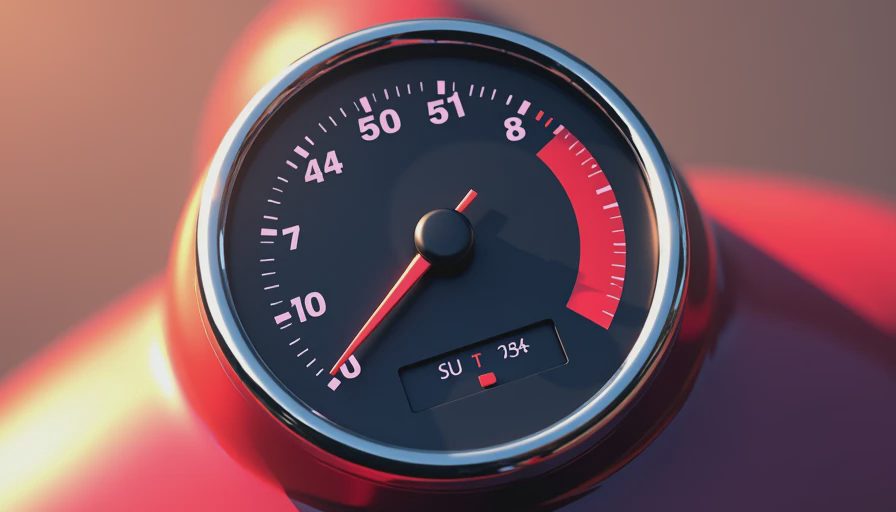
To get there, Kawasaki used every trick in the book. The supercharger spins at more than 130,000 rpm and force-feeds the engine enough air to create serious horsepower. The carbon-fiber fairing is shaped like a fighter jet's wing, complete with small winglets that generate downforce. At 200 mph, the H2R is not floating around. It's planted, stable, and completely committed to the direction the rider points it.
Ninja H2R Top Speed vs. Hypercars
Let's put that 249 mph into car terms. The Bugatti Chiron Super Sport 300+ became the first production car to break 300 mph, but that was a limited edition with 1,600 horsepower and a $3.9 million price tag. The Koenigsegg Agera RS has run over 277 mph with the right setup. The H2R, at 249 mph, is slower on paper than those multi-million-dollar machines — but it does it with roughly 500 pounds of motorcycle, no seatbelt, and a business-card windshield.
What impresses me is not just the straight-line speed. The H2R can carry that speed into a corner. The motorcycle was developed on racetracks, and the winglets generate downforce that works in the corners, not just on the straights. A superbike that tops 249 mph and still flicks left and right like a 600cc sportbike is an engineering achievement no car can touch at this weight.
For collectors, the H2R is a garage queen with a mean streak. It costs roughly $55,000 new, which is less than a base Porsche 911 but delivers a performance hit that makes a 911 look like a sensible daily driver. A used H2R in good shape holds its value remarkably well, because there's simply nothing else like it.
Why the H2R Feels Different Behind the Bars
I've spent more hours than I can count in high-performance cars. The best ones communicate through the seat and the steering wheel. The H2R communicates through your ribs. When the supercharger spools and the tach passes 8,000 rpm, the bike is not just accelerating; it's rotating the earth beneath you. The rush is physical, not just numerical. From behind the wheel, what stays with you is the sound — a whine that builds to a shriek, then the whole world blurs.
Standing at a track-day pit lane, watching someone launch an H2R, you understand why 249 mph isn't a marketing trick. It's the natural limit of a machine that refuses to be road-mannered. The rider tucks flat, the winglets bite, and the bike becomes a bullet.
Heritage Note: The Supercharged Bloodline
Kawasaki's Ninja line has always been about breaking rules. The original 1984 Ninja GPZ900R was the first production motorcycle to reach 150 mph. Three generations later, the H2R is the spiritual successor to that obsession with speed. It even revives the H2 nameplate from the 1970s, a two-stroke triple that dominated its class in its day. Kawasaki doesn't just build fast bikes. It builds statements about what a motorcycle can be.
Should You Buy a Ninja H2R?
That depends on where you live and how much track time you actually get. The H2R is not a toy for the faint of heart. It demands respect, physical strength, and a level of concentration that leaves you exhausted after a 20-minute session. If you want the same engine with lights and mirrors, the Ninja H2 is a better daily companion. But if you want the pure, unfiltered legend — the one that hits 249 mph and doesn't care what you think — the H2R is the only answer.
Before you line up at a dealer, think about tires, maintenance, and the fact that every ride is an event. The H2R is a race bike with a VIN, and it treats every mile as a qualifying lap. For the collector who wants the fastest thing on four wheels? No, the H2R is on two wheels. And that's exactly why it earns its place in any garage that takes speed seriously.