A jump start modern car warning is the kind of message that can turn a calm morning into a little roadside drama. One minute the dash is dark and polished, the next a modern coupe or SUV throws a battery icon, a stability-control lamp, or a service charging-system notice after you get it fired back up. That does not always mean the car is damaged. It often means the voltage dipped low enough to upset the electronics, and in a late-model car that can be enough to light half the dashboard. Every car has a story. Here's this one.
A good first step is to slow down and read the car, not the fear. If the engine starts cleanly after the jump, the problem may be a weak battery, a tired alternator, or a battery management system that needs a few minutes to settle. If the car clicks, struggles, or refuses to crank even with a donor battery, that is a different story and usually points to a bad connection, a dead battery, or a starter issue. Modern cars are less forgiving than old mechanical machines, but they are also better at telling you when something electrical is off.
Why the jump start modern car warning appears
In older cars, a dead battery often meant a dim dome light and a frustrating no-start. In newer cars, the same low-voltage event can confuse the control modules that manage steering assist, transmission logic, stability control, infotainment, and even the parking brake. The car may start, but the computer sees voltage that fell below its comfort zone and stores a fault.
That is why the warning can be temporary. A weak 12-volt battery may still have enough energy to turn the starter once, but not enough reserve to keep every module happy during the crank. If the battery is original and has seen four to six years of heat, short trips, and start-stop use, the warning is often the car's polite way of saying the battery is fading.
Heritage Note: an old carbureted Alfa might cough, clear its throat, and keep going. A modern BMW, Audi, or Porsche can react with a chorus of warnings because its electronics are watching voltage in real time. Same roadside problem, very different temperament.

A quick scan with an OBD-II reader can help, but you do not need a workshop to make the first judgment. If the message vanishes after a normal drive and the car restarts cleanly later, the episode may have been a low-battery event rather than a hard failure. If the warning returns the next morning, the battery is suspect. If it returns with dim lights, slow cranking, or a burning smell, stop treating it as a simple inconvenience.
What to check before you clip on the cables
Before touching cables, open the owner's manual and find the jump-start instructions for that exact model. Some cars have dedicated jump posts under the hood. Others want you to connect in a specific order or avoid the battery terminals in the trunk. That matters on modern vehicles because the battery can sit far from sensitive electronics, and the manufacturer may want the current routed through a safer service point.
Look at the battery itself if it is accessible. A swollen case, cracked housing, leaking fluid, or heavy corrosion means you should not keep trying to revive it. If the car has start-stop technology, it likely uses an AGM or EFB battery, not a basic flooded battery. Those batteries are built for repeated cycling, but they also need the right replacement type when the time comes.
Check the donor car or jump pack too. A weak booster pack that has been sitting in a trunk for a year can fail at the moment you need it. A portable lithium jump pack from NOCO, Clore, or a similar brand is a smart glovebox tool, but it should be charged regularly. I like to think of it as insurance for your own mistake.
The safest way to jump a modern car
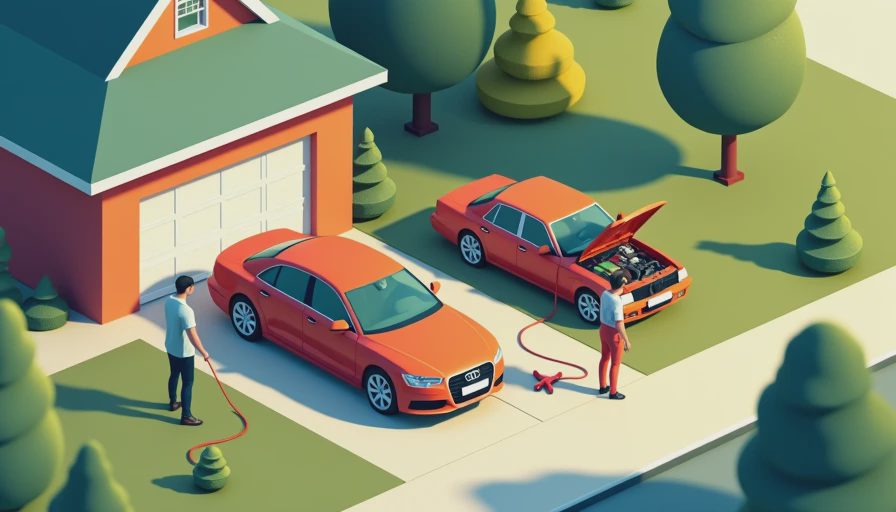
The cleanest approach is simple: park both cars, set the brakes, switch everything off, and connect the positive leads first. Then attach the negative lead to a solid engine or chassis ground on the disabled car, not directly to the battery in cars that specify a remote ground. That reduces the chance of a spark near battery gases and gives the current a better path. If your manual says to use a dedicated ground point, use it.
After the cables are secure, let the donor sit for a minute or two. On many cars, the dead battery needs a little surface charge before the starter behaves normally. Start the disabled car and let it idle briefly. Do not slam the throttle like you are leaving a cars-and-coffee lot. Give the charging system time to stabilize.
If the car starts, turn on the headlights and cabin fan for a few minutes to smooth the load, then drive it normally for 20 to 30 minutes if conditions allow. That gives the alternator a chance to replenish the battery. If you have a plug-in battery charger at home, a slow overnight charge is often better than a long idle session in the driveway.
When the warning is really the battery talking
If the jump start modern car warning comes back after a short drive, the battery itself is probably tired. A healthy 12-volt battery should read about 12.6 volts at rest, and anything near 12.2 volts after sitting is already weak. A battery can still crank the engine and still be on its last legs. That is why a shop load test matters more than wishful thinking.
Replacement costs are usually manageable. Many mainstream cars land in the $180 to $350 range for a new battery installed, while some luxury cars, AGM units, and vehicles with battery registration can run $300 to $500 or more. A compact jump pack may cost $60 to $180, which is cheap compared with a tow or a missed trip to Pebble Beach or Monterey. If your car needs battery registration after replacement, a good independent shop or dealer can handle it with the correct scan tool.
The alternator is the other suspect. If the battery keeps dying, the car needs a jump every few days, or the dash battery lamp stays on, the charging system may not be doing its job. A slipping serpentine belt, bad alternator diode, or parasitic draw from a module that will not go to sleep can all drain a healthy battery overnight.
Roadside help, insurance coverage, and the expensive mistake to avoid
This is where roadside assistance earns its keep. Many insurers offer it as a low-cost add-on, often for just a few dollars a month, and standalone motor clubs still make sense for drivers who commute, tour, or keep a weekend car on tender duty. Towing, battery service, and lockout help cost a lot more when you pay out of pocket at the wrong hour.
The expensive mistake is to keep driving while the car is still flashing fault messages and hoping the electronics will sort themselves out. On a modern 911, a Mercedes, a Volvo, or a family SUV, a low-voltage event can trigger a chain of false-looking warnings that still deserve attention. If the steering feels heavy, the transmission behaves oddly, or the brake warning stays lit, park the car and get the system checked.
A jump is a rescue, not a cure. If the battery is old, the terminals are dirty, or the alternator is tired, the message will return. Get the battery tested, clean the grounds, and verify the charging voltage before the next cold start leaves you stranded again. That is the quiet, practical way to handle a jump start modern car warning: respect the electronics, read the symptoms, and fix the cause before it becomes a larger bill.