A car chase is one of cinema's oldest automotive romances: tires chirping across wet pavement, a perfectly timed downshift, and a machine revealing its character under pressure. From the Ford Mustang in Bullitt to the Mini Coopers of The Italian Job, these scenes made ordinary viewers care about cars as characters. In the real world, however, a car chase belongs on a closed course or a movie set, never on public roads. The same passion that draws enthusiasts to dramatic driving should also encourage careful preparation, proper coverage, and respect for everyone sharing the road.
Every car has a story. Here's this one: the best chase scenes are not really about speed. They are about tension, mechanical personality, and the relationship between a driver and a machine. A 1968 Dodge Charger communicates through its stance and exhaust note, while a lightweight Mazda Miata creates drama with momentum rather than brute force. That distinction matters when enthusiasts decide how to enjoy performance responsibly.
Why the Car Chase Became Automotive Theater
The classic car chase works because it gives a vehicle a role. In Bullitt, the dark green Mustang and black Dodge Charger are not interchangeable props. Their suspension movement, engine sounds, and body language create two competing personalities. The sequence feels memorable because the cars appear to have intentions of their own.
French Connection brought a rougher, more unsettling energy, while Ronin treated European sedans and sports cars as precise instruments. Modern films often use digital effects, but practical driving still has a particular texture: brake dive, tire loading, imperfect gear changes, and a car working hard through a corner. Those details are what enthusiasts notice at once.
Heritage Note: Many famous screen cars became valuable because film preserved their character for a wider audience. A movie appearance cannot replace originality, but it can turn a model such as the Mustang, Charger, or Alfa Romeo Spider into a cultural reference point for generations.
For collectors, the lesson is simple. A car's importance is not measured only by horsepower or auction price. Provenance, design, sound, and the memories attached to a model can matter just as much. The strongest car chase scenes understand that instinctively.
The Difference Between Film and Public-Road Reality
A professional car chase is built around permits, route control, camera vehicles, stunt coordinators, medical planning, and drivers trained to repeat a maneuver safely. Roads are inspected, traffic is managed, and the production accepts that a take may need to be abandoned. Even then, stunt work carries serious risk.
A public-road car chase has none of those protections. There may be pedestrians, cyclists, blind driveways, stopped traffic, changing pavement, and drivers who have no idea what is happening. A split-second decision can produce a collision, injuries, criminal charges, or permanent damage to a rare automobile. Trying to follow, block, or confront another driver only increases the danger.
If an aggressive driver is pursuing you, prioritize escape from the situation rather than engagement. Keep doors locked, avoid driving home, leave room around your vehicle, and head toward a busy, well-lit location or a police station. Call emergency services when safe. Do not attempt to record the incident while driving or use your vehicle to punish the other driver.
For enthusiasts, the right substitute is a track day, autocross, driver-education event, or professionally supervised closed-course experience. These settings let you explore braking, cornering, and acceleration without turning a public street into an uncontrolled experiment.
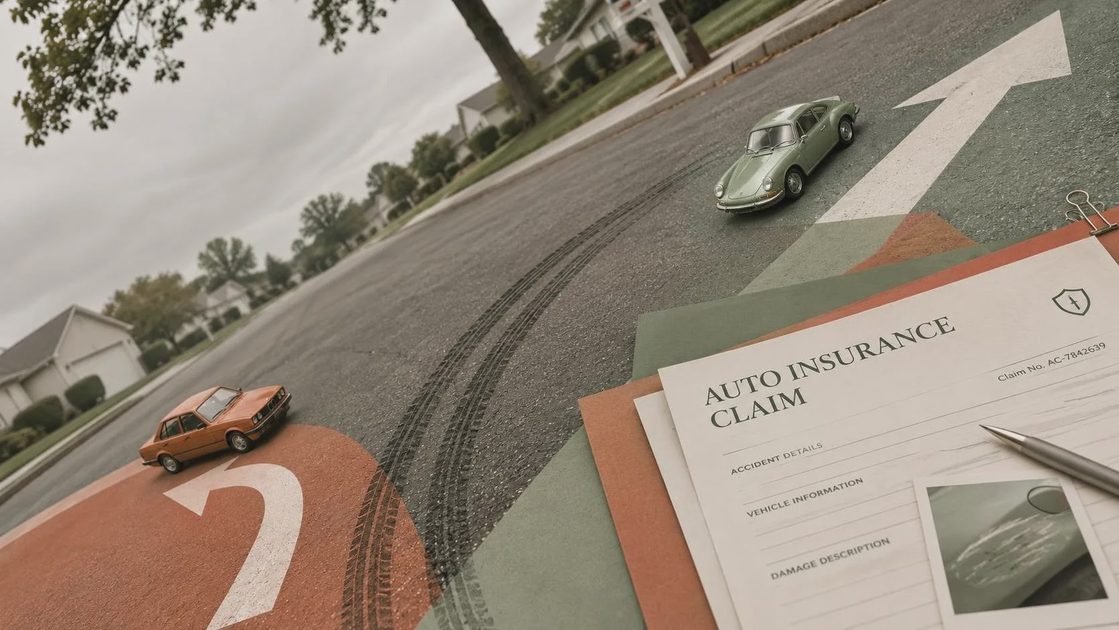
How Insurance Responds After a Car Chase
Auto insurance is designed for covered accidents, not deliberate vehicle use that creates extraordinary danger. Liability coverage generally helps pay for injuries or property damage you cause to others in a covered crash, up to your policy limits. It does not make reckless or intentional conduct consequence-free, and criminal or fraudulent acts can create serious coverage problems.
Collision coverage can help repair or replace your vehicle after a crash, subject to the deductible and policy terms. Comprehensive coverage generally applies to non-collision losses such as theft, vandalism, fire, falling objects, or weather damage. Neither coverage should be treated as permission to drive aggressively. An insurer can investigate the facts, review police reports, and determine whether exclusions or policy conditions apply.
If you own a collector vehicle, ask specifically how agreed value, stated value, mileage restrictions, storage requirements, and repair-shop provisions work. A classic Alfa Romeo, Porsche 911, or early Mustang may need a specialty policy rather than ordinary daily-driver coverage. Agreed-value insurance can be useful because the insured amount is established in advance, but the vehicle must meet the policy's eligibility and use rules.
Choosing Coverage for Performance and Collector Cars
Start with liability limits that reflect your assets and driving exposure, rather than choosing only the minimum required by your state. A serious accident can involve vehicle repairs, medical bills, lost income, and legal costs. Higher limits are often available through an umbrella policy, which can add another layer of personal liability protection after underlying limits are exhausted.
For a modern performance car, compare collision and comprehensive deductibles in the $500 to $2,000 range and understand how rental reimbursement works. A Porsche Cayman used for commuting needs a different conversation from a Ferrari 308 stored in a garage and driven to shows. Tell the carrier how the car is actually used. Misstating mileage, storage, or ownership details can create avoidable trouble during a claim.
Companies such as Hagerty and Grundy are known for collector-focused products, while major carriers including State Farm, GEICO, Progressive, and Allstate offer broad personal auto options. The best fit depends on eligibility, valuation, usage, limits, and claims service, not simply the logo on the policy card.
Safer Ways to Enjoy the Chase-Car Feeling
You do not need a movie set to experience what makes a car chase compelling. At a track day, begin with a technical inspection: check tire age and pressure, brake-pad thickness, fluid levels, wheel torque, and seat-belt condition. Drive the first sessions below your limit and learn the circuit before increasing pace. Smooth steering and early vision are more valuable than dramatic slides.
Autocross offers another excellent route. Speeds are usually lower than at a road course, but the driver works intensely on precision, weight transfer, and car placement. A stock Miata can teach more about momentum than a 700-horsepower supercar allows on a public street. That is not a compromise; it is a better education.
If your interest is cinematic rather than competitive, look for stunt-driving schools or manufacturer performance programs with qualified instructors. Ask what insurance is included, what damage is excluded, and whether the school supplies the vehicle. Your personal policy may not cover damage during a track event, so never assume a normal auto policy follows you onto a racing surface.
A Collector's Checklist Before the Next Drive
Before taking a special car out, confirm that your insurance card, registration, roadside assistance details, and emergency contact information are available. Photograph the vehicle's condition if it is being transported or displayed. For a newly purchased collector car, keep the bill of sale, appraisal, restoration invoices, and build documentation together. Those records can help establish value and ownership after a loss.
Review your policy at least once a year and after major modifications. A rebuilt engine, upgraded suspension, custom wheels, or fresh paint can change replacement costs. Ask whether parts must be original, whether modern safety equipment is permitted, and how the insurer handles diminished value or salvage retention.
The smartest enthusiast is not the driver who imitates a car chase on the freeway. It is the person who understands the machine, protects other road users, and chooses a setting where skill can develop without gambling with someone else's future. From behind the wheel, what stays with you is not reckless speed but the clean rhythm of braking, turning, and accelerating at exactly the right moment.