There are cars you drive, and there are cars that seem to wave at everyone they pass. The Citroen 2CV belongs firmly in the second category. Its corrugated panels, canvas roof, rocking suspension, and cheerful little engine turn an ordinary errand into a countryside adventure. From behind the wheel, what stays with you is not speed but the sensation of being entirely present. Every car has a story. Here's this one.
Why the Citroen 2CV Still Matters
The Citroen 2CV was introduced at the 1948 Paris Motor Show, created to provide practical, affordable transportation for rural France. Its brief was famously simple: carry two farmers, a load of eggs, and perhaps a sack of potatoes across rough ground without breaking the eggs. The result was an engineering exercise in restraint rather than excess.
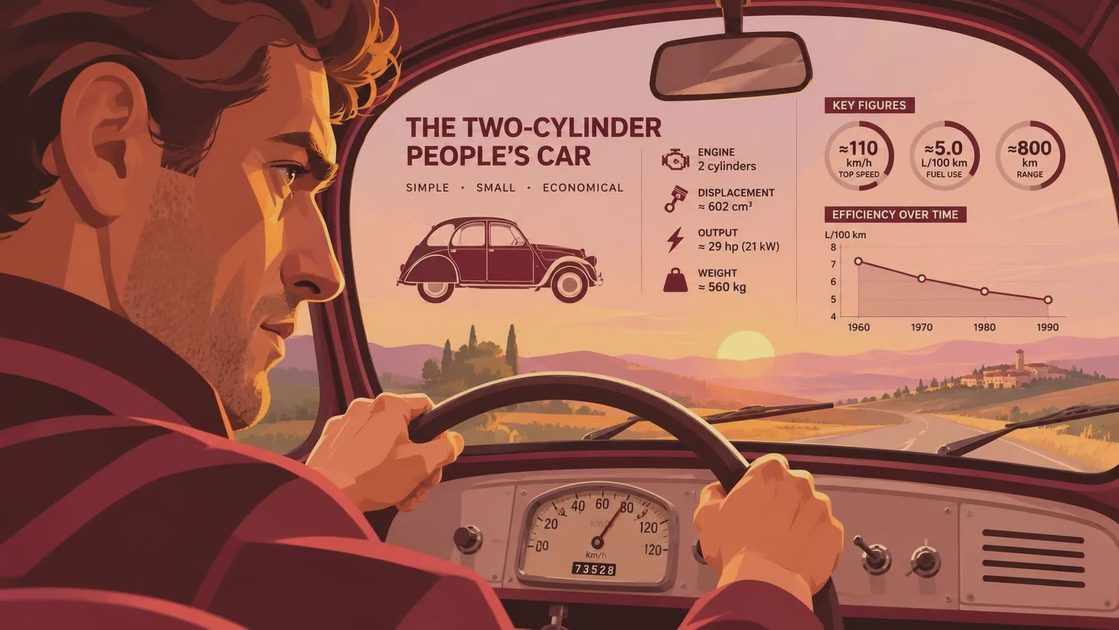
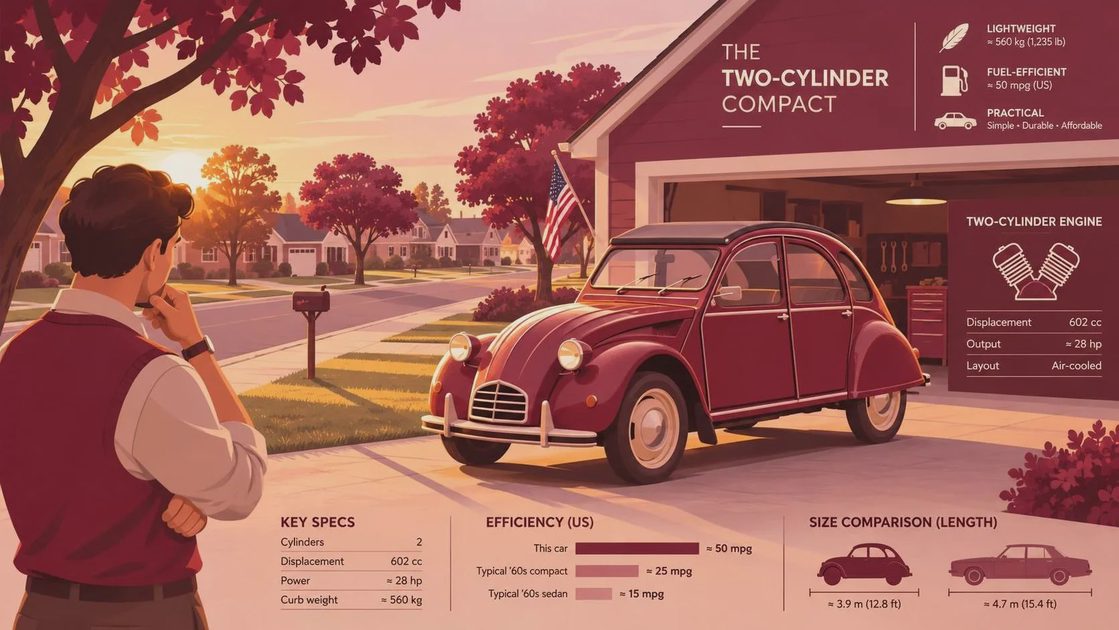
That mission shaped every detail. The early cars used an air-cooled, horizontally opposed two-cylinder engine, front-wheel drive, a very light body, and long-travel suspension. The suspension design allowed each wheel to respond to uneven roads with remarkable independence. It was not fast, polished, or luxurious, but it was unusually capable on poor surfaces and wonderfully easy to understand.
The Citroen 2CV also became a cultural object. It served as family transport, farm machinery, student transportation, and a symbol of postwar optimism. Later versions gained more power, improved brakes, and better equipment, but the essential personality remained intact. A Citroen 2CV never pretends to be something it is not. That honesty is a large part of its appeal today.
Heritage Note: Citroen's genius was not simply making a cheap car. It was making simplicity feel intelligent. The same instinct later appeared in the company's hydropneumatic innovations and unconventional styling, but the 2CV remains the clearest expression of the idea.
What It Feels Like Behind the Wheel
Climb into a Citroen 2CV and you immediately notice how much glass surrounds the cabin. The seats feel more like folding chairs than modern automotive furniture, and the dashboard is delightfully sparse. Starting one involves a little ceremony, particularly on an older example, but the flat twin soon settles into a busy, mechanical chatter.
The gear lever sprouts from the dashboard, the steering is light, and the body leans through corners with theatrical enthusiasm. That lean is not a warning sign by itself; it is part of the design. The suspension is doing its work, keeping the tires in contact with the road while the body communicates every change in direction.
A Citroen 2CV rewards anticipation. You carry momentum rather than relying on horsepower, choosing a line early and working with the engine instead of fighting it. On a winding coastal road near Monterey, it would be hopelessly outpaced by a modern sports car, yet it could deliver a more vivid memory. You hear the engine, smell the countryside, and feel the road surface through the seat.
It is also a remarkably social car. Drivers wave. Children point. People who know little about automobiles often recognize its friendly shape. That response is difficult to engineer and impossible to fake.
Choosing the Right Citroen 2CV
Condition matters more than a particular badge or trim level. The earliest cars have enormous historical charm, while later 2CV6 models are generally easier to use in modern traffic because of their larger engines and more developed braking systems. A well-sorted later car can be a better first classic than a rarer but neglected early example.
Inspect the chassis carefully. Rust in the frame, floor sections, suspension mounting points, and inner fenders can turn an appealing purchase into a major restoration. Replacement panels are available, but labor adds up quickly. Look beneath the carpets, examine the door bottoms, and check whether repairs appear neatly welded or hastily covered with underseal.
The engine should start without excessive smoke, maintain steady oil pressure, and pull cleanly through the gears. Oil leaks are common on old air-cooled engines, but a heavy leak is still a reason to investigate. Check the brakes, kingpins, steering joints, tires, and electrical system. A test drive should include cold starting, low-speed maneuvering, highway cruising, and a close listen for drivetrain noises.
Authenticity matters differently depending on your goal. A concours-minded collector may value correct upholstery, factory colors, period wheels, and the proper dashboard details. A touring owner might reasonably choose upgraded lighting, electronic ignition, improved sound deadening, or a more comfortable seat. The best modifications preserve the car's character rather than disguising it.
Ownership Costs and Practical Considerations
A usable Citroen 2CV can cost less to maintain than many European classics because its mechanical systems are straightforward and parts support remains strong. Basic service items such as fluids, filters, spark plugs, belts, and brake components are not exotic. Owners who enjoy working in a home garage can handle much of the routine maintenance with ordinary tools and a good manual.
Restoration is a different financial proposition. A solid driver might land in the low five figures, while a highly finished example can command substantially more depending on provenance, originality, and workmanship. A rusty body or chassis can consume several thousand dollars before paint and trim are considered. Budget for tires, seals, upholstery, and electrical sorting even when the car appears presentable.
Insurance deserves attention before the purchase. If the vehicle will be driven occasionally, a classic-car policy can offer agreed-value coverage, mileage limits, and specialized claims handling. If it will serve as daily transportation, a standard policy may be more appropriate. Ask about storage requirements, permitted mileage, roadside assistance, and whether spare parts or restoration costs are covered. The cheapest premium is not always the best protection for a scarce original component.
A Citroen 2CV is happiest on secondary roads, not in fast freeway traffic. Its modest performance requires patience, and modern trucks can feel intimidating. Keep generous following distance, use visible lighting, and choose routes that suit the car. That is not a limitation so much as an invitation to slow down.
The Citroen 2CV at Shows and in Collections
At a concours, the Citroen 2CV presents an interesting judging challenge. It does not win attention through brightwork or a racing pedigree. Its appeal lies in proportion, originality, and the evidence of a thoughtful life. Correct panel gaps, period-correct materials, clean mechanical details, and an honest presentation matter more than excessive polish.
A restored example should not look like a miniature luxury car. The thin steering wheel, simple switches, painted metal, and practical upholstery are part of its identity. Over-restoration can remove the very qualities that make the model historically important. I would rather see a carefully preserved, well-documented car with gentle patina than a glossy example assembled from mismatched parts.
For a collection, the Citroen 2CV provides a valuable counterpoint to a Ferrari, Porsche, or Alfa Romeo. It demonstrates that automotive significance is not measured only by acceleration or auction headlines. Three generations later, this is still the car that reminds enthusiasts why clever design and human scale matter.
Is This French Classic Right for You?
Choose a Citroen 2CV if you want a classic that encourages relaxed driving, simple mechanical involvement, and conversation wherever it goes. It suits an owner who enjoys weekend runs, local shows, farmers markets, and scenic roads more than high-speed touring. It also makes an excellent companion to a faster collector car because its mission is completely different.
Before buying, find a specialist who can inspect the chassis, verify the engine and gearbox, and distinguish a proper repair from cosmetic concealment. Obtain parts estimates for any rust, brake work, or missing trim. Then compare insurance quotes using the car's actual use, storage, and agreed value rather than assuming a vintage vehicle is automatically inexpensive to cover.
The Citroen 2CV is not a car for chasing lap times or winning a stoplight contest. It is a car for noticing weather, road texture, and the people smiling from the sidewalk. In a world increasingly filled with power, screens, and isolation, that may be its most luxurious feature. Every car has a story, and this one still tells it with a shrug, a rattle, and a great deal of charm.