Every car has a story. Here's this one. The Tesla Model Y dethroned the status quo when it became the world's best-selling car in 2023. But by 2024, that crown has shifted, and the shift is worth a closer look. As a Pebble Beach judge and a lifelong collector, I watched the Model Y's rise with curiosity rather than devotion. Now that the sales numbers are settling, I want to share why this dethronement is actually good news for anyone who loves driving.
When the Model Y took the global sales crown, many predicted a permanent electric era. The crossover had everything on paper: impressive range, supercharger access, and a silky electric powertrain. But the real world is messier. Owners began complaining about harsh rides, cheap interior plastics, and inconsistent panel gaps. Tesla's own price cuts in 2024 told the story of a company fighting to keep demand up. The Model Y remains a strong seller, but the momentum has clearly stalled.
Tesla Model Y Dethroned: The Sales Shock
The numbers are changing. In 2023, the Model Y was the top-selling vehicle worldwide, an unprecedented feat for a battery-electric car. By 2024, however, familiar combustion models like the Toyota RAV4 and even the Ford F-Series started reclaiming ground. Auto industry analysts point to a shifting market where EV adoption has plateaued in some regions, and hybrid powertrains are drawing buyers who want efficiency without range anxiety. The Model Y's dethroning wasn't a single dramatic event; it was a slow erosion of goodwill.
What surprises me most is how quickly the narrative flipped. Two years ago, everyone wanted a Tesla. Today, the waiting list for a RAV4 hybrid is longer than the line for a Model Y at some California dealers. That's a cultural reset. People are realizing that a car needs more than a smartphone-style interface to win hearts. It needs to feel alive.
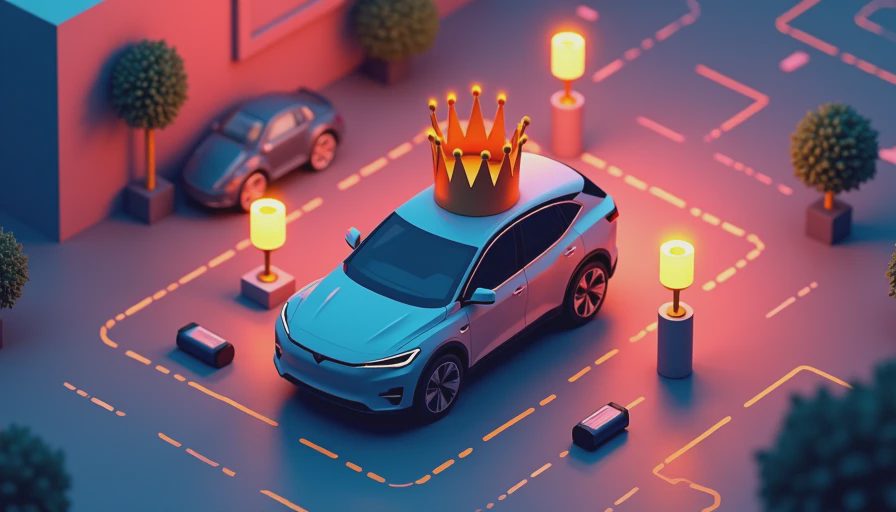
Why the Model Y Lost Its Grip
Let's be honest about the drive. I've spent time in the Model Y Performance at Laguna Seca, and while the instant torque is impressive, the steering is numb and the chassis feels disconnected. For a car that weighs nearly 4,400 pounds, it does a decent job hiding its mass, but it never communicates like a sports car. The ride comfort, especially on the larger wheels, is borderline punishing on broken pavement. This is a car designed for efficiency, not emotion.
From behind the wheel, what stays with you is the silence and the futuristic minimalism, but not a single moment of joy. That's unusual for a crossover at this price point. Compare it to a Mazda CX-5 Turbo, which has a luscious interior, a composed ride, and a steering feel that actually tells you what the front tires are doing. The Mazda isn't an EV, but it's a reminder that affordable cars can still have character. The Model Y, for all its tech, misses that essential ingredient.
Enthusiast Alternatives Worth Your Attention
If the Tesla Model Y dethroned the idea that efficiency alone sells cars, then the new wave of EVs should be paying attention. The Porsche Macan Electric is a far better interpretation of a fast crossover, with steering feel that would embarrass the Tesla and a chassis that forgives mid-corner mistakes. The luxury cabin is properly finished, and the build quality is what you'd expect from Porsche. Sure, it costs more, but you feel where every dollar went.

Another option is the Ford Mustang Mach-E GT, which embraces a more American muscle-car character. It's heavier than the Model Y, but the suspension tuning gives it a playful, tail-happy attitude that makes back roads interesting. And if you want a pure EV with genuine soul, the Hyundai Ioniq 5 N deserves serious consideration. It has simulated gear shifts, a wild exhaust note pumped through the speakers, and a chassis that genuinely enjoys being thrown around. These alternatives prove that electric cars can be passionate.
Heritage Note: Why Character Endures
This brings me to a Heritage Note. The Toyota RAV4, which has symbolically taken the sales crown, doesn't have a glamorous history. But it has thirty years of reputation for reliability and practicality. That's a different kind of heritage, one built on trust. Meanwhile, the Porsche brand carries decades of motorsport DNA, and it shows in every Macan they build. The lesson is simple: cars win because of the story they tell. The Model Y's story lost a few chapters.
What This Means for Enthusiasts
For enthusiasts, the news is refreshing. Automakers now realize they can't just slap a battery in a crossover and expect buyers to line up. They need to offer a reason to care. For the used market, this also opens opportunities. A used Model Y can now be had for less money, and with better-equipped rivals arriving, Tesla has to compete on more than its charging network.
In the long run, I predict this dethronement will push Tesla to improve. The next-generation Model Y, if it ever arrives, will need better suspension tuning, a more engaging interior, and maybe even steering that tells you something. Other manufacturers are already listening, and the result is a diverse landscape of EVs that drive differently, rather than a cookie-cutter segment.
So for me, watching this dethronement is a satisfying evolution. It shows that car culture is still alive, even in the electric age. We don't want our machines to be appliances. We want them to be partners. The Model Y is a fine appliance, but not a true partner. And that's why the crown had to go.