A motorcycle built for maximum speed has a peculiar beauty: the rider disappears behind the fairing, and every exposed edge becomes an argument with the air. The fastest motorcycle depends on the category. The outright motorcycle land-speed record belongs to the Ack Attack streamliner, which reached 376.363 mph on a measured two-way average in 2010. Among road-going machines, the answer is less tidy: the Kawasaki Ninja H2R is a track-only reference point, while the Kawasaki Ninja H2 and Suzuki Hayabusa belong in the road-legal conversation. Those are very different machines chasing very different kinds of glory.
The outright record: Ack Attack
The Ack Attack looks more like a projectile than anything parked outside a coffee shop. Its record run at Bonneville used two Suzuki Hayabusa engines in a purpose-built, fully enclosed streamliner. Rocky Robinson rode it to the 376.363 mph average that established the motorcycle land-speed record. That figure is not a single momentary peak: the record was based on runs in opposite directions over a measured distance.
That distinction matters. A two-way average helps account for the influence of wind and course conditions, and it gives us a more meaningful number than a speedometer photograph. The Ack Attack is the fastest motorcycle in the outright land-speed-record sense, but it is not a production bike and cannot tell you what to expect from a showroom machine.
The engineering challenge is almost as compelling as the number. At those speeds, the shape of the body, stability, tire construction, gearing, and the surface beneath the wheels matter alongside horsepower. Bonneville's salt is part of the story too: a long, open course makes extraordinary speeds possible, but its surface and weather can change the challenge from one attempt to another.
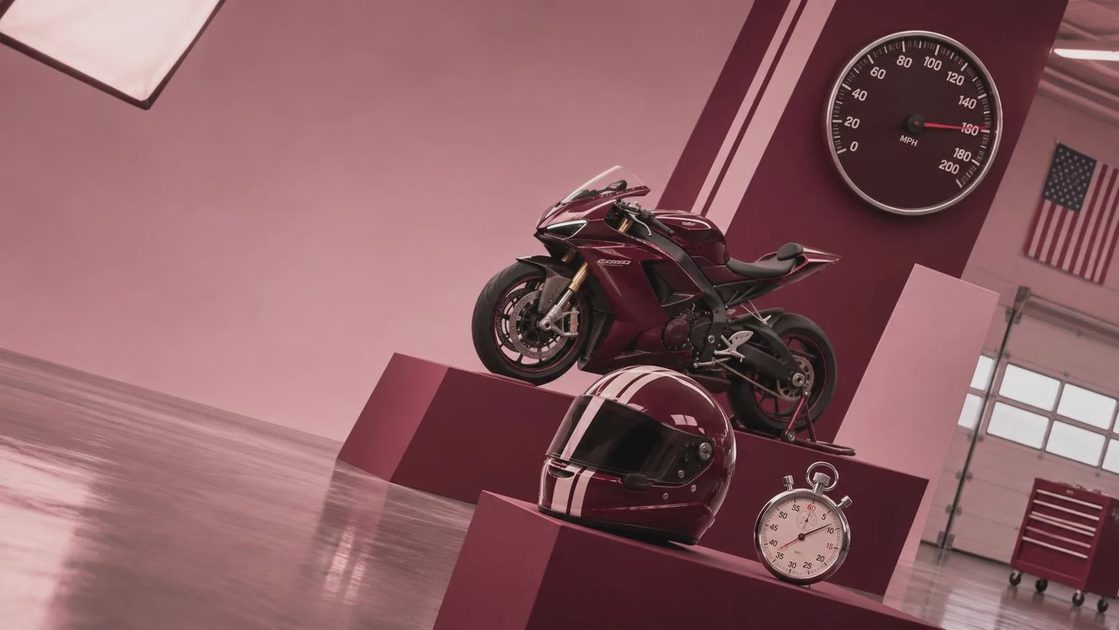
Track-only speed: Kawasaki Ninja H2R
Kawasaki's Ninja H2R is the machine to know when the conversation turns to production-based, closed-course speed. Its supercharged engine and dramatic aerodynamic bodywork make it unmistakable, but its track-only status is the important qualification. It is not a street-legal Ninja H2 with a slightly more ambitious paint job.
A widely publicized H2R run by racer Kenan Sofuoglu reached a reported 400 km/h, or roughly 249 mph, on Turkey's Osman Gazi Bridge. Treat that as a headline demonstration, not as an outright land-speed record or a directly comparable two-way production-bike record. The conditions, measurement method, and category are different from those behind the Ack Attack figure.
For an enthusiast drawn to the fastest motorcycle experience on a closed course, the H2R's appeal is its uncompromising purpose. For a collector, its significance also lies in Kawasaki's decision to bring supercharging and extravagant aerodynamics to a limited, specialized machine. Check the exact bike's documentation, intended use, and local rules before assuming any example can be registered or run at a particular event.
Road-legal contenders: H2 and Hayabusa
The supercharged Kawasaki Ninja H2 is the road-going relative in the family. It offers a very different proposition from the H2R: a motorcycle intended for road use rather than a closed-course special. The Suzuki Hayabusa takes another route, pairing its famous aerodynamic silhouette with the character of a big-displacement sportbike. Both matter to anyone comparing the fastest motorcycle candidates that can be registered for the street, subject to local requirements.
Neither should be crowned on a casual internet list. Reported top speeds vary with the model year, market, electronic restrictions, modifications, rider position, and test conditions. An indicated speed is not necessarily a verified road speed, and a one-direction run is not equivalent to a certified two-way average. Before accepting a claim, find out exactly which model was measured, whether it was standard, and how the speed was recorded.
Heritage Note: The Hayabusa's arrival at the end of the 1990s became a defining chapter in the production-bike speed race. Its rounded bodywork was never just a styling exercise; it gave the motorcycle a silhouette inseparable from its aerodynamic ambition. The H2 name, meanwhile, connects Kawasaki's supercharged machines to an older performance lineage. These bikes carry their histories differently, which is part of why the comparison is more interesting than a single number.

Why the numbers are so hard to compare
The phrase fastest motorcycle can mean an outright record holder, a street-legal production model, or the quickest bike in a particular class. Those categories are not interchangeable. A streamlined record machine, a track-only superbike, and a registered streetbike face different rules and make different compromises.
The shape of a speed claim deserves scrutiny as well. Manufacturer projections, instrument readings, GPS measurements, and sanctioned records are different kinds of evidence. Look for a stated course, a method of timing, and whether the figure is an average or a peak. If the bike has altered gearing, engine tuning, or bodywork, it is no longer a straightforward measure of the showroom version.
And top speed is not acceleration. A motorcycle that reaches a higher terminal speed over a very long distance will not necessarily be quicker from a standing start or around a circuit. Gearing and aerodynamic drag become especially important as speed rises; outright power alone does not settle the question.
What a buyer or collector should look for
If ownership is the goal, begin with the bike's intended life. A road-legal machine can be enjoyed on public roads within the law; a track-only model needs an appropriate venue, transport, and a plan for maintenance. Neither belongs in an attempt to reproduce a record on public pavement.
For a collectible example, examine the title and registration status, service records, original components, and evidence of crash repairs or performance modifications. Fairings can conceal expensive damage, and changes to engine management or gearing can complicate both reliability and a collector's assessment of originality. A qualified motorcycle technician's inspection is money well spent, especially when the machine's history is incomplete.
I would also look beyond the headline. The fastest motorcycle on a particular day is an achievement; the machine that changed how people thought about speed can remain fascinating long after its number has been surpassed. That is true whether its home is a salt-flat record book or a carefully maintained garage.