At sunrise in Monterey, the Porsche 911 Dakar looks slightly mischievous. Its raised suspension, white wheels, red tow hooks, and optional graphics suggest that someone took a perfectly polished sports car, pointed it toward a gravel road, and refused to apologize. After living with the idea behind this car, my porsche 911 dakar off road review begins with a simple observation: it is not a pretend adventure vehicle. It is a carefully engineered act of rebellion against the 911’s usual definition.
The Dakar is based on the all-wheel-drive Carrera 4 GTS, but Porsche gave it much more than extra ride height. It has a 473-horsepower twin-turbo flat-six, an eight-speed PDK transmission, rear-axle steering, active engine mounts, and two dedicated driving modes called Rallye and Offroad. The result is a car that can attack a winding road in the morning, cross a rough fire road at lunch, and still feel unmistakably like a 911 by dinner.
What makes the Dakar different
The first surprise is visual rather than mechanical. The Dakar sits about two inches higher in its standard position than a normal 911, and its lift system can raise it farther for serious obstacles. The stance is purposeful without becoming cartoonish. Chunky Pirelli Scorpion All Terrain Plus tires replace the usual performance rubber, while reinforced underbody protection helps defend the engine and transmission from loose-rock punishment.
Those tires tell the story. They are not designed to deliver the ultimate lap time at Laguna Seca, and they do not pretend otherwise. Their sidewalls flex over broken pavement and gravel, giving the car a layer of movement that a low-slung 911 normally suppresses. On asphalt, the Dakar remains remarkably precise, but the steering feels a touch more textured and the braking response a little less razor sharp than a 911 GT3’s.
The Rallye mode sends more drive toward the rear and permits controlled oversteer on loose surfaces. Offroad mode prioritizes traction and clearance, making the car calmer when the road turns into embedded rocks, ruts, and washboard. Both modes are accessed through the familiar rotary controller on the steering wheel. Porsche did not bury the character under a complicated touchscreen menu, which is exactly right for a car meant to be driven with intent.
From behind the wheel, what stays with you is...
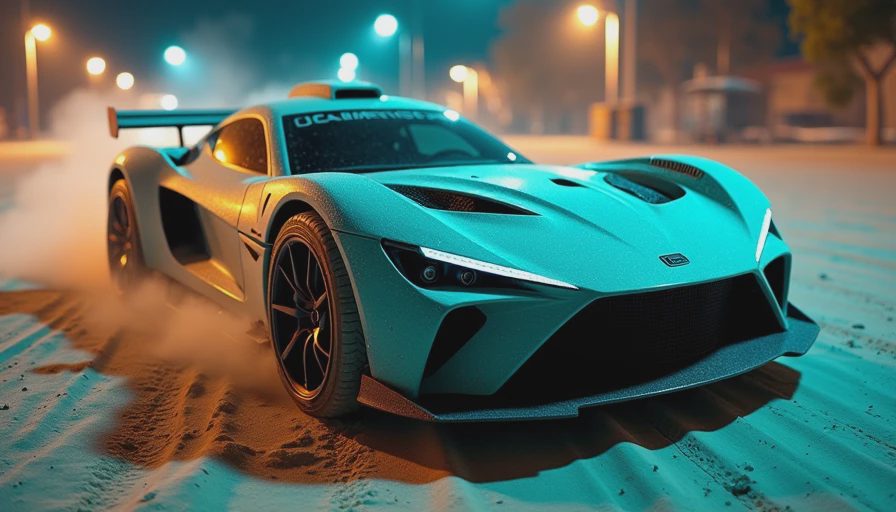
From behind the wheel, what stays with you is the Dakar’s willingness to move beneath you without losing its core discipline. On a gravel road, the steering remains alive, the front end bites confidently, and the rear tires can be encouraged into a long, manageable slide. It does not feel like a lifted SUV pretending to be sporty. It feels like a sports car that has learned a new language.
A careful driver can carry surprising speed over loose ground, but the real pleasure is not a heroic top-speed run. It is the sequence of small decisions: choosing a line around a rut, feeling the tires load over a crest, easing onto the throttle, and letting the all-wheel-drive system find grip. The Dakar rewards rhythm more than aggression. That quality makes it entertaining even at speeds that would seem ordinary on pavement.
On the highway, the car is easier to live with than its rally costume suggests. The seats are supportive, the cabin is familiar 911 territory, and the ride in its normal setting is compliant enough for daily use. Road noise from the all-terrain tires is noticeable, especially on coarse concrete, but it never becomes exhausting. The compact rear seats remain useful for bags, helmets, or a child who does not mind climbing into a small space.
The engine supplies the theater. The 3.0-liter flat-six delivers force from low revs, then builds with a hard-edged rush as the tachometer climbs. The PDK changes gears with the speed expected of a modern Porsche, but manual paddles still let the driver shape the experience. In a car with this much capability, restraint becomes part of the fun; the Dakar can reach 60 mph in roughly 3.2 seconds, yet its personality is not defined by drag-strip numbers.
Heritage Note: the 911 goes rallying
The name Dakar points back to Porsche’s rally history, particularly the 1984 Paris-Dakar-winning 911 Carrera 3.2 4x4 and the later 959 that dominated the event. The modern car is not a replica of either machine. It does not have their exposed expedition hardware or desert-race purpose. Instead, it borrows their central idea: a 911 can be thrilling when the road stops being smooth.
That connection matters because the Dakar is more convincing when viewed as a continuation of Porsche’s adventurous engineering than as a luxury lifestyle accessory. Porsche has long understood that heritage works best when it informs function. The roof-mounted auxiliary lights, special graphics, and available Rallye Design Package attract attention, but the suspension calibration and tire choice are what make the story believable.
Collectors will also notice the restraint. Unlike many limited editions, the Dakar does not rely solely on a dramatic color or a numbered plaque. Porsche limited production to 2,500 examples worldwide, which creates scarcity, but the car’s lasting interest comes from its unusual mission. It is a 911 that expands the map rather than simply raising the price of entry to a familiar formula.

Where the Dakar gives up ground
A fair porsche 911 dakar off road review must discuss the compromises. The Dakar is not a rock crawler, and its approach angles, tire size, and expensive bodywork impose sensible limits. Deep mud, sharp ledges, and water crossings belong to a purpose-built four-wheel-drive vehicle. A damaged carbon-fiber panel or scraped wheel can turn a playful excursion into a very costly afternoon.
It also gives up some road-car sharpness. A GT3 feels more communicative under hard braking and more settled during a fast, committed corner. The Dakar’s taller body and all-terrain tires produce more roll and movement. That is not a defect; it is the price of giving a 911 enough flexibility to travel over dirt without becoming fragile.
The original U.S. price was around $222,000 before options, and the limited production run made dealer markups and collector speculation part of the conversation. Used examples can command substantial premiums depending on mileage, color, equipment, and market enthusiasm. Buyers should budget for specialized tires, careful wheel protection, and comprehensive insurance appropriate for a high-value limited-production car.
Is it worth buying?
The answer depends on what you want your 911 to say. If your priority is the fastest road lap, a GT3 is the clearer choice. If you want long-distance comfort and everyday flexibility, a Carrera 4 GTS makes a more conventional argument. But the porsche 911 dakar off road review becomes compelling when the buyer values character above efficiency.
This is the car for an owner who already has a sports car and wants something with a better story. It can carry luggage to a mountain cabin, cross a dusty access road, and return home through a canyon without feeling like a compromise at every turn. The Dakar makes ordinary roads feel like invitations. That is a rare talent, even among expensive cars.
Before buying, inspect the underbody, confirm that the correct Pirelli tires are fitted, and look closely at the wheels and front air intakes. Ask about paint protection and verify that the lift system operates smoothly. A careful pre-purchase inspection from a Porsche specialist is money well spent, particularly on a car that may have been driven enthusiastically in the environment it was built to explore.
Final verdict from the driver’s seat
My porsche 911 dakar off road review ends where the car itself begins: with the road ahead. The Dakar is not the most rational 911, the most precise 911, or the best value in Porsche’s range. It is something more memorable. It turns a familiar sports-car shape into a permission slip for better detours.
Every car has a story. Here’s this one. The Porsche 911 Dakar tells a story about rally heritage, mechanical confidence, and the simple joy of choosing the unpaved route. For the right collector, that story is worth far more than another tenth on a racetrack.