There is a particular pleasure in a long drive when the car settles into its rhythm: tires humming, engine turning smoothly, and every passenger occupied without asking the driver for a hotspot password. In-car Wi-Fi is not the sort of feature that announces itself like carbon-fiber trim or a heroic exhaust note. Instead, it quietly makes a modern vehicle feel more capable, especially on a winding trip beyond reliable cellular coverage.
For a collector, enthusiast, or busy family, the value is simple. In-car Wi-Fi keeps tablets, laptops, phones, and streaming devices connected through a dedicated vehicle system. It can make a grand tour more relaxing, a workday commute more productive, and a cross-country drive less chaotic. Every car has a story. Here's this one: connectivity has become part of the experience of traveling well.
What in-car Wi-Fi actually does
In-car Wi-Fi uses a built-in modem and an external cellular antenna to create a private wireless network inside the vehicle. Passengers connect to it much as they would connect to a home router. The vehicle generally needs an active data plan, either through the automaker, a wireless carrier, or a compatible connected-services package.
That dedicated connection can be more stable than using a phone as a hotspot. A roof-mounted antenna often gives the system a stronger signal, while the vehicle's power supply means nobody is draining a phone battery just to keep a rear-seat screen online. Depending on the model, the network may support several devices at once, although performance depends on local coverage, plan limits, and network traffic.
In-car Wi-Fi does not create service where no cellular signal exists. A remote canyon, underground garage, or rural mountain road can still leave every device offline. The advantage is convenience and consistency, not magic. When the signal is available, the system works in the background without requiring someone to hold a phone in the perfect position.
Why enthusiasts should care about connectivity
Performance cars are often judged by steering feel, brake pedal response, and the way an engine gathers revs. That judgment remains essential. Still, modern luxury is also about preserving the character of a journey. A 911 driving from Monterey to a track day, a Range Rover crossing the desert, or a vintage-inspired grand tourer carrying luggage to a concours event benefits from a cabin that does not feel technologically compromised.
In-car Wi-Fi is especially useful when the driver wants fewer distractions. Passengers can stream music, review maps, join a video call, or download entertainment without passing a phone around the cabin. A driver can keep attention on the road while a passenger handles navigation and communication from a connected tablet.
It is also useful for vehicles that serve as mobile offices. A laptop user can connect during a parking break, and a family can keep multiple devices online without juggling separate cellular plans. The best systems disappear into the background, which is exactly what good automotive design should do.
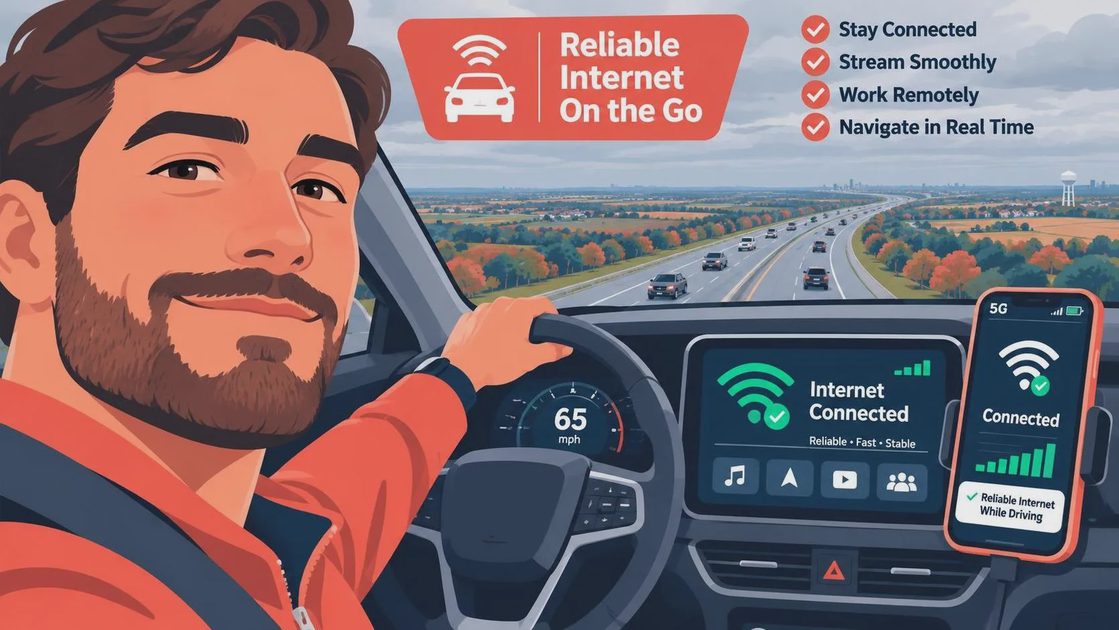
Factory systems versus phone hotspots
A phone hotspot costs nothing extra if an existing mobile plan includes sufficient data, and it is the obvious choice for an older vehicle. It is portable, familiar, and easy to activate. For occasional use, that may be all anyone needs. A quality portable hotspot can also serve multiple vehicles and sometimes offers better plan flexibility than an automaker's subscription.
Factory in-car Wi-Fi has a different appeal. It is integrated into the vehicle, normally starts with the ignition or connected-services system, and uses a dedicated antenna. Some systems remain active for passengers after the engine is switched off, while others can be managed through a manufacturer app. The cleaner installation matters in a luxury cabin, where a loose hotspot and charging cable can look as out of place as a modern cup holder in a carefully restored Alfa Romeo.
Before paying for a plan, test the system with the devices you actually use. Check whether it supports 5 GHz connections, how many devices can connect, and whether video streaming consumes data quickly. A system priced at $10 to $30 per month can be sensible for frequent travelers, but unnecessary for a driver who takes only short local trips.
How much does in-car Wi-Fi cost?
The hardware is often included with a vehicle's connected-services package, though some manufacturers bundle it only with higher trims. Trial periods commonly last a few months or a year, followed by monthly or annual pricing. Exact prices change by automaker and carrier, but a realistic budget is roughly $10 to $30 monthly for regular service, with occasional premium plans costing more.
The bigger cost question is data. Music streaming uses less data than high-definition video, and several rear-seat screens can consume a plan quickly. Families should look for a generous data allowance or a plan that slows speeds after a threshold rather than stopping access entirely. A solo driver who uses navigation and email may need very little.
Ask whether the subscription can be paused, transferred to another vehicle, or canceled without a penalty. Also confirm whether the trial automatically renews. A calendar reminder before the trial ends can prevent a forgotten charge, particularly on a collector car that spends much of the year under a cover.
Heritage Note: technology should serve the journey
There is a temptation to treat every new feature as an enemy of mechanical character. I understand that instinct. I have spent hours studying the details of cars whose beauty comes from a hand-finished dashboard, a thin-rimmed steering wheel, or a gear lever that communicates through every shift. Yet technology is not automatically a betrayal of heritage.
The great grand tourers of the past were built to make distance feel smaller. Their makers added larger fuel tanks, better seats, improved ventilation, and stronger lighting because the purpose was not simply to move quickly. It was to travel with pleasure. In-car Wi-Fi belongs to that same tradition when it removes friction without demanding attention.
From behind the wheel, what stays with you is still the road: the sound of a straight-six near its torque peak, the changing light across the hood, and the calm that arrives after an hour of clean pavement. Connectivity should support those moments, not replace them.
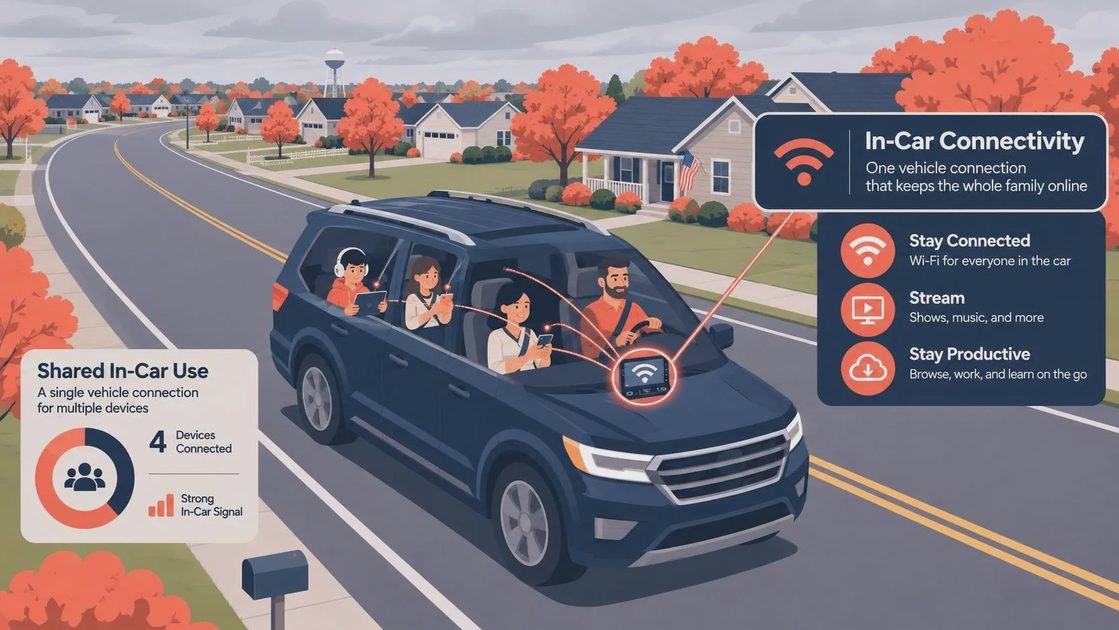
Choosing the right setup for your car
Start with the vehicle's age and role. A new luxury sedan or SUV may already have an integrated modem, so using the factory system is usually the neatest answer. A classic Porsche, Alfa Romeo Spider, or early Mazda Miata will need a phone hotspot or a compact aftermarket unit. In those cars, hide the device carefully and use a quality power adapter rather than leaving a bright gadget on the dashboard.
Next, estimate your real usage. Two passengers listening to music for a weekend can use a modest plan. A family streaming movies on a 2,000-mile vacation needs more headroom. If you regularly cross state lines, compare the carrier's coverage map along your route instead of relying on coverage near home.
Finally, protect the driving experience. Set the network name and password before leaving, download critical maps in advance, and let a passenger manage connected devices. Never adjust a hotspot or browse account settings while moving. A reliable system is valuable only when it helps the cabin stay calm and the driver stay focused.
Is in-car Wi-Fi worth it?
For frequent travelers, families, and owners who spend time on the road between events, in-car Wi-Fi is a worthwhile convenience. It can replace multiple phone hotspots, keep passengers occupied, and make a sophisticated vehicle feel complete. The value is strongest when the car is used for long journeys rather than short errands.
For an occasional driver, a phone hotspot is probably enough. The money saved can go toward better tires, fresh brake fluid, or the careful detailing that makes an older car feel alive again. No connectivity package can compensate for poor maintenance or a tired suspension.
The right choice depends on the story you want your vehicle to tell. If the car is a traveling companion, choose the integrated system and enjoy the ease. If it is a weekend escape, keep the technology simple and let the mechanical character lead. In-car Wi-Fi is not the star of the drive, but when properly chosen, it makes the supporting cast work beautifully.