A vintage Alfa Romeo has a way of making an ordinary drive feel like a small piece of cinema. The steering is alive, the engine speaks in pulses, and every bend becomes part of the car's story. A dash cam can preserve that story, but dash cam privacy deserves the same care as the camera itself. Before recording a spirited Sunday drive, understand what your lens captures, where those files go, and how to avoid turning a memorable outing into an unnecessary legal or personal problem.
What a Dash Cam Actually Records
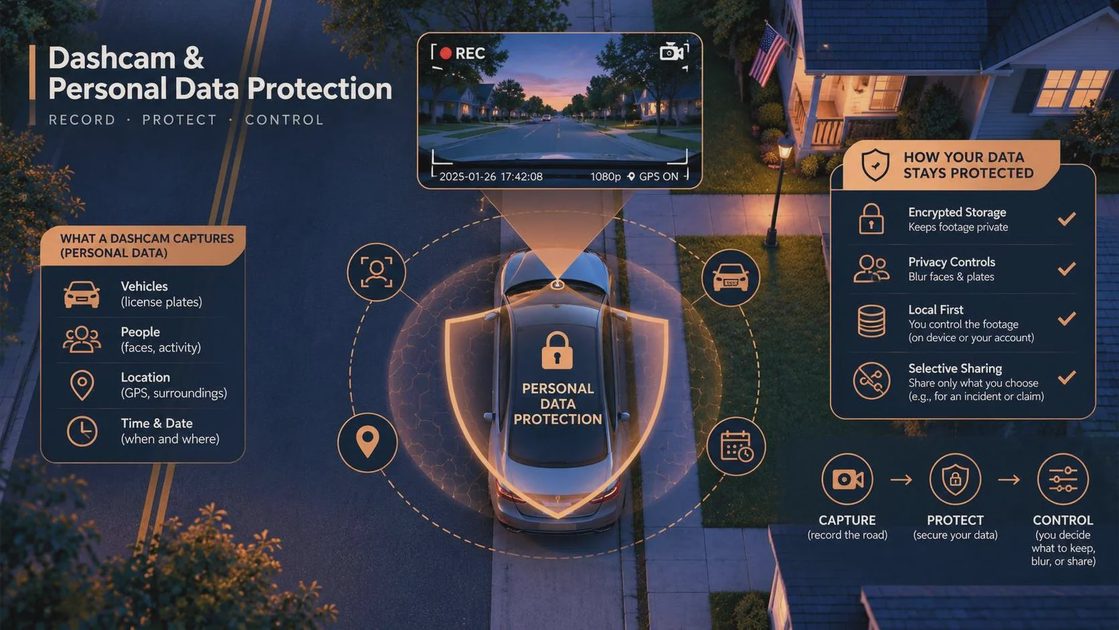
Most modern cameras capture more than the road ahead. Depending on the model, the frame may include license plates, pedestrians, neighboring properties, passengers, other vehicles, and private conversations. GPS data can add location, speed, and time. A rear camera might show a driver following behind, while a cabin camera can record everyone inside the car.
That information is useful after a collision. A clear clip can show a traffic signal, lane position, or the moments before an impact. It can also document vandalism in a parking lot or a hit-and-run. Still, dash cam privacy begins with recognizing that useful evidence can contain identifiable details about people who never agreed to appear in your footage.
Think of the camera as a witness with a very good memory. It does not know which moments matter, and it does not understand the difference between a public road and an intimate conversation. Your settings and habits provide that judgment.
Dash Cam Privacy Settings Worth Changing
Start with the microphone. If you primarily want collision evidence, audio may add little value while capturing conversations, phone calls, navigation instructions, or a passenger's personal discussion. Many Garmin, Nextbase, Vantrue, and BlackVue models allow audio recording to be disabled with a menu setting or physical button.
Next, review GPS and cloud features. GPS stamps can strengthen a timeline, but they also create a record of where the vehicle traveled. Cloud-connected systems can upload clips automatically, which is convenient after a crash but introduces another account, password, and data-storage point. Use a strong unique password, enable two-factor authentication when available, and understand whether clips are retained indefinitely or deleted on a schedule.
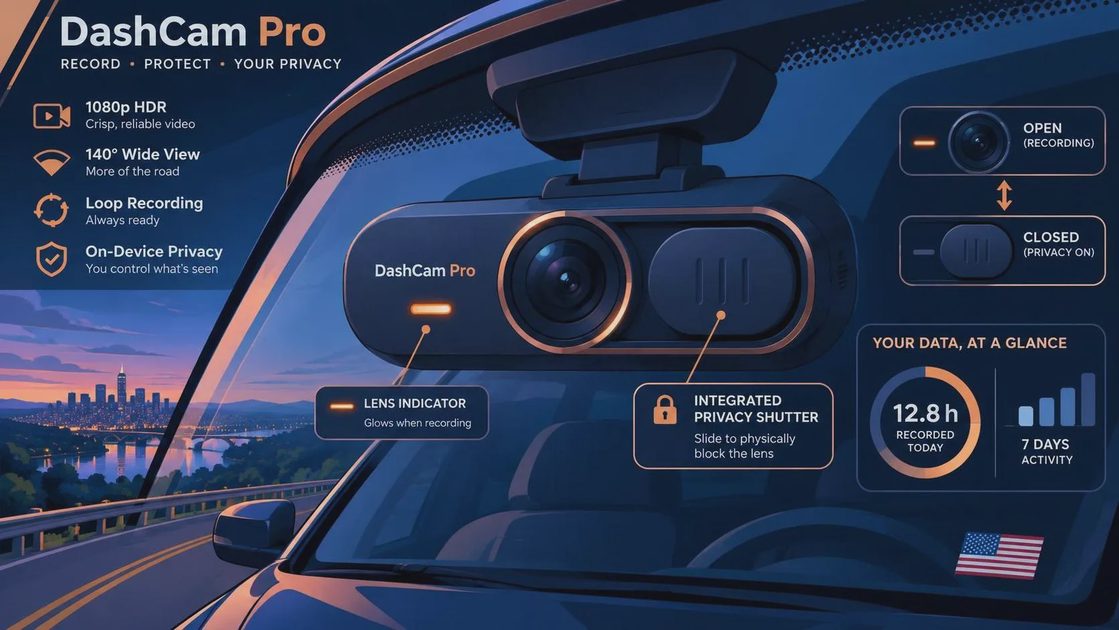
Privacy filters are also practical. Choose a narrower field of view when possible, avoid aiming into a cabin unless you genuinely need that view, and cover or remove a rear-facing camera when transporting guests who prefer not to be recorded. A small indicator light is not a substitute for consent, but it helps make recording visible rather than secretive.
Is Dash Cam Recording Legal?
Dash cam privacy law is not identical across the United States. Recording video in a public place is generally treated differently from recording private conversations, and audio rules can be stricter than video rules. Some states require all parties to consent before a private conversation is recorded, while others permit recording when one participant consents. Vehicle-mounted cameras can also face restrictions if they obstruct the driver's view.
The safest approach is simple: disable audio unless you have a clear reason to keep it, do not hide a camera in a way that suggests surveillance, and mount equipment outside the driver's critical viewing area. If you cross state lines for a rally or concours weekend, review the rules for the places where you will drive rather than assuming your home state's standard follows you.
This is general information, not legal advice. A local attorney can answer questions about a disputed recording, workplace vehicle, commercial use, or a camera installed inside a rental car. Dash cam privacy becomes especially important when footage includes a minor, a medical conversation, or an argument that was never intended for public distribution.
Sharing Clips Without Creating a New Problem
The best clip is often the one you keep private. Before uploading a dramatic pass, near miss, or parking-lot encounter to YouTube, Instagram, Reddit, or a driving forum, inspect every frame. Blur license plates and faces. Remove GPS overlays, home addresses, timestamps that reveal a routine, and audio containing names or personal details.
Avoid posting footage while you are still away from home. A clip showing a car at a track, auction, or hotel can reveal that a property is unattended. For collectors, this matters more than many people realize: a recognizable garage, rare registration plate, or familiar route can identify both the vehicle and its owner.
If you send footage to an insurer, police department, or attorney, use the original file and preserve the memory card when practical. Do not edit the only copy. Export a working duplicate for sharing and record when the file was created. That simple chain of custody is more useful than a heavily compressed social-media version.
Storage, Retention, and Security
A dash cam's loop-recording feature normally overwrites old files as the memory card fills. That is convenient, but an important event can disappear if you do not lock it promptly. After a collision, remove the card or copy the relevant file to a computer and a secure backup. Keep the original untouched.
Use a high-endurance microSD card rated for continuous recording. Cheap cards can fail under heat, vibration, and repeated overwriting, particularly in a car parked under a summer sun. Format the card according to the camera manufacturer's instructions, and replace it when the camera reports errors or begins missing clips.
For cloud systems, read the retention terms. Some brands offer a free basic tier and charge roughly $5 to $20 per month for expanded storage or cellular connectivity. The convenience can be worthwhile for a valuable collector car, but it is not automatically better for dash cam privacy. Decide who can access the account, whether employees or service providers process clips, and how quickly deleted files disappear from backups.
A Collector's Practical Recording Routine
My own routine is deliberately unglamorous. Before leaving the garage, I check the mount, confirm that the lens is clean, and verify whether audio is disabled. I use a dedicated card, not one shared with another camera. After a noteworthy drive, I review only the clips that matter and delete ordinary footage rather than building an accidental archive of every errand.
For a track day, I tell passengers and instructors that the camera is running. I position the lens toward the circuit, not toward a helmeted passenger, unless the interior view is part of the agreed video. At a private event, I follow the organizer's recording policy. A polished car gathering depends on trust as much as chrome and paint.
Heritage Note: Early motoring photographs were carefully composed because film was expensive. Digital video feels limitless, but restraint still improves the story. A short clip showing a 911 rotating neatly through a corner says more than hours of indiscriminate footage.
The Right Balance Between Evidence and Respect
A dash cam is a remarkably useful tool for a modern driver. It can clarify a collision, protect an enthusiast from a false account, and preserve the sound of a special engine on a road worth remembering. Yet the camera should serve the journey, not quietly collect everyone encountered along it.
Good dash cam privacy practice is straightforward: limit audio, secure accounts, inspect footage before sharing, blur identifying details, retain important originals, and remove recordings you no longer need. Those habits take minutes and cost little compared with the consequences of careless disclosure.
Every car has a story. Here's this one: the finest recording is not necessarily the longest or loudest. It is the clip that preserves the drive while respecting the people who happened to share the road.