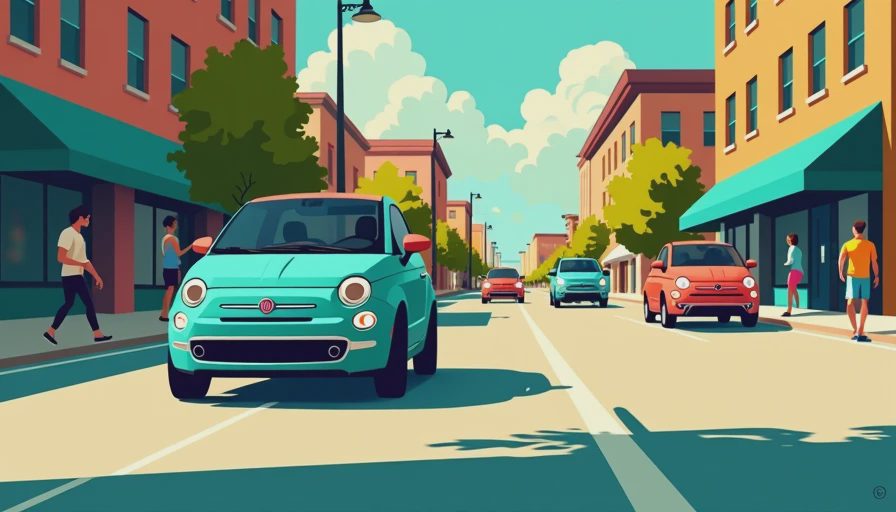
Every car has a story. Here's this one: the first time I slid behind the wheel of a 1972 Fiat 500, I understood why small Italian cars have captivated generations. It wasn't the horsepower—it was the character. That tiny two-cylinder engine chattering away, the way the whole car leaned into corners as if it were part of the road, the knowing grin from other drivers who recognized a kindred spirit. Small Italian cars aren't about practicality or speed; they're about joy, heritage, and a distinct approach to driving that bigger machines simply can't replicate.
For decades, Italy has produced some of the most memorable small cars in automotive history. From the iconic Fiat 500 and 600 to the sporty Alfa Romeo Giulietta Sprint and the quirky Lancia Fulvia, these vehicles punch far above their weight in personality. They were born in a country where narrow medieval streets and tight parking spots demand compact dimensions, but Italian engineers never treated small as an excuse for boring. Instead, they wrapped every inch in style, sound, and soul.
What Makes Small Italian Cars Special?
The magic of small Italian cars lies in their ability to make you feel connected to every aspect of driving. The steering is often unassisted, so you feel every ripple in the asphalt. The suspension is stiff enough to communicate but supple enough to keep your spine intact. And the engines—whether a twin-cylinder buzz from a Fiat or a high-revving four from Alfa—sing with a timbre that no muffler can replicate. When you're driving a small Italian car, you're not just transporting yourself; you're participating in a decades-long conversation between driver and machine.
Heritage Note: The original Fiat 500, launched in 1957, was Italy's answer to postwar mobility. Designed by Dante Giacosa, it measured barely ten feet long and used a rear-mounted, air-cooled engine. Over four million were sold, and today it's a beloved classic that still turns heads at concours events. The modern revival, the 500 launched in 2007, captures that same spirit with a cheeky nod to the original.
Small Italian cars also have a distinctive design language. Pininfarina, Bertone, and Giugiaro all cut their teeth on compact platforms. The Alfa Romeo Giulietta Sprint (1954) defined the modern coupe shape with its fastback roofline and elegant proportions. The Lancia Fulvia Coupe (1965) used a narrow-angle V4 engine and front-wheel drive in a package that weighed less than a ton. These weren't economy cars—they were rolling sculptures.
Driving Experience: More Than Specs
From behind the wheel, what stays with you is the immediacy. I still remember taking a friend's 1971 Fiat 124 Spider through the curves of Highway 1 near Big Sur. That car had maybe 90 horsepower, yet every corner felt like an event. The lack of power meant you kept momentum alive, carrying speed through bends with the rhythm of a dance. Small Italian cars demand that you drive them actively—there's no electronic nanny, no lazy automatic. You shift, you steer, you balance the chassis with the throttle. It's pure, unfiltered motoring.
Modern small Italian cars carry the torch. The current Alfa Romeo Giulietta (though now SUV-ified in spirit), the Fiat 500 Abarth, and the rare Maserati MC20 might not be tiny by historic standards, but they retain that core Italian philosophy: make the driver feel something. The Abarth's snarling exhaust and torquey turbo four are a direct line to the old 595 SS. The 500e, Fiat's electric city car, even manages to channel the original's playful character with instant torque and a tight turning radius.
Collecting and Owning Small Italian Cars
If you're thinking about adding one of these treasures to your garage, here's what you need to know. First, rust is the enemy. Many Italian cars from the '60s and '70s had questionable rust protection. Inspect floors, sills, and shock towers carefully. Second, parts availability can be surprisingly good for popular models like the Fiat 124 Spider, 500, and Alfa Romeo Spider. Specialist suppliers in the U.S. and Italy keep these cars on the road. Third, join a club. The Fiat Club America, Alfa Romeo Owners Club, and Lancia Motor Club are invaluable for technical advice and camaraderie.
Pricing runs the gamut. A project Fiat 500 can be found for $5,000–$10,000, while a concours-ready original might push $30,000. Alfa Giulietta Sprints start around $20,000 and climb into six figures for rare late-model Spider Veloces. The Lancia Fulvia Coupe has been appreciating fast; good examples now command $30,000–$50,000. But don't let prices scare you—a well-sorted, less-common model like the Fiat 850 Spider or the Autobianchi A112 Abarth can deliver massive smiles for under $15,000.
The Best Small Italian Cars for Enthusiasts
Not every small Italian car fits the same owner. Here's a quick guide:
- Fiat 500 (original and modern): Perfect for urban fun and vintage charm. The modern Abarth adds real performance.
- Alfa Romeo Giulietta Sprint: The connoisseur's choice. Beautiful design, lively handling, and a truly special engine note.
- Lancia Fulvia Coupe: A rally-bred legend that feels surprisingly modern to drive. The V4 engine is a conversation starter.
- Fiat 124 Spider: The classic roadster experience. Affordable, easy to work on, and gorgeous with the top down.
- Autobianchi A112 Abarth: A tiny hot hatch from the '70s that out-hustled many larger cars. Rare, but worth seeking out.
Each of these small Italian cars offers a unique window into Italy's automotive soul. They remind us that driving isn't about numbers—it's about emotion. Three generations later, this is still the car that makes you take the long way home.
Why Small Italian Cars Remain Relevant
In an era of massive grilles and heavy EVs, small Italian cars stand as a counterpoint. They prove that less truly can be more if you focus on what matters: engagement, style, and a sense of occasion. Whether you're navigating a tight parking garage in a modern 500 or carving through canyon roads in a vintage Giulietta, these cars deliver an experience that no spreadsheet can capture. They are not for everyone—and that's exactly the point. They are for those who understand that driving is about the story, not the destination.
So the next time you see a small Italian car parked beside you, take a moment. Look at the design, listen to the idle, maybe talk to the owner. Chances are, they have a story to tell. And every car has a story. Here's this one.